What Is Post-Construction Cleaning? Rough, Final, and Touch-Up
By Mess Fixers
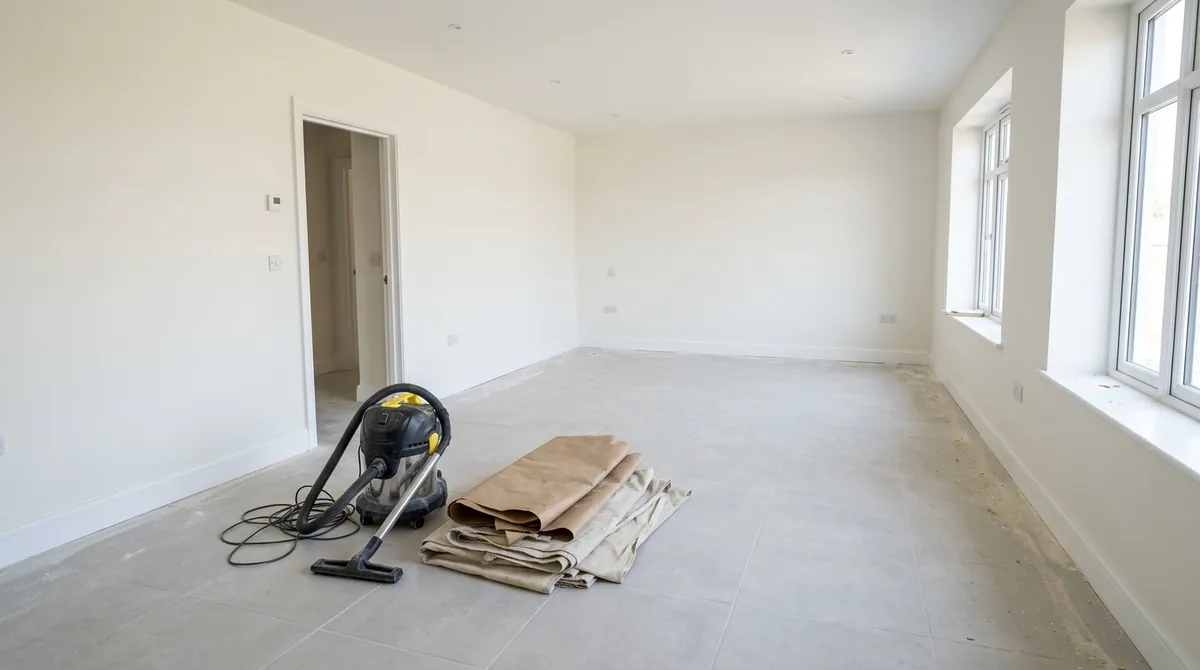
Post-construction cleaning removes agreed construction debris, fine dust, and removable trade residue from a building or renovated space. The stage of work determines the cleaning you need: Rough Clean supports the next construction phase, Final Clean details completed surfaces, and Touch-Up addresses light new dust or marks after a completed Final Clean.
A kitchen remodel and a new house can need different sequences. Choose the pass by the work still happening on site and the condition of the finished surfaces. You do not need to book all three phases for every project.
Rough Clean: Between Construction Stages
Post-Construction Rough Clean fits an active or partly completed site that needs agreed loose debris and dry dust removed before the next trade or finish stage. The work can include bagging agreed small debris into your accessible on-site container, staging light cutoffs, and dry dust extraction from accessible checklist areas.
Book this intermediate pass when the next crew needs clearer work areas. Confirm who removes bulk debris, tools, and unused materials. Rough Clean does not prepare every finished surface for presentation, and it does not include off-site hauling by default.
Final Clean: After Dust-Producing Work Ends
Post-Construction Final Clean fits completed areas after major cutting, sanding, drywall work, and dust-producing punch repairs have stopped or have been separated from the areas to be cleaned. Schedule it before the walkthrough, photos, furnishing, or handoff that needs those surfaces ready.
The team captures loose fine dust before using a material-appropriate wet method. The checklist covers accessible finished surfaces, baseboards, doors and frames, kitchen and bathroom details, and completed hard floors. It also includes accessible kitchen and bathroom storage within the booked allowance and the installed microwave inside and out.
A newly installed surface can need a different product or moisture level from the surface beside it. Identify fresh paint, curing coatings, protective films, stone, acrylic, and other materials with special care instructions before the visit. Share the installer's restrictions rather than assuming that a new finish can tolerate scrubbing.
Touch-Up: After a Completed Final Clean
Post-Construction Touch-Up addresses light new dust, fingerprints, footprints, and minor marks after Final Clean. A returning trade or a staging visit may leave a few areas needing attention before the next walkthrough.
Use Touch-Up for that limited return. Tell the provider if sanding, cutting, or other dust-producing work has resumed. A property with a fresh heavy dust load needs a scope review rather than an assumption that the earlier Final Clean makes all later work a touch-up.
Site-Readiness Checklist
Confirm these details with the contractor and cleaning provider before the visit:
- Finish or isolate dusty trades in the booked areas, including dust-producing punch repairs.
- Remove bulk debris, construction equipment, and stored materials that block access.
- Provide the required running water and electricity.
- Identify protected finishes, curing surfaces, restricted rooms, and residue the team should assess before touching.
- Arrange safe access to the work areas. Report the unit floor, stairs, elevator arrangements, and equipment route separately from parking or loading instructions.
- Name a contact who can answer surface and scope questions, and share the next event and its deadline.
If another trade returns before handoff, check what changed: light dust and footprints may fit Touch-Up, while renewed sanding or widespread residue calls for a new assessment.
Glass, Interiors, and Other Separate Tasks
Final Clean includes accessible interior windowsills and frames and loose dust from open tracks. Window glass and sliding-door glass require separate selections. So do blinds, deep track detailing, full wall or ceiling care, elevated access, and deeper per-fixture detailing. An exterior wipe of an accessible fixture differs from removing its globe or opening its housing.
Confirm refrigerator, freezer, oven, and dishwasher interiors as separate work. Paint splatter, adhesive, silicone, cement, heavy grout haze, stickers, and protective-film removal need assessment outside ordinary loose-dust cleaning. Ask the appropriate provider which localized work is currently available. More pressure or a stronger cleaner can damage the finish beneath bonded residue; neither complete removal nor a scratch-free result can be assumed.
Lead and Other Hazardous Dust
Tell the contractor and cleaner which materials were disturbed. Work involving lead-based paint in covered pre-1978 properties has separate lead-safe cleanup and verification requirements. Cutting concrete, stone, brick, or mortar can also produce respirable silica. Suspected hazardous dust needs assessment and the appropriate qualified provider before ordinary cleaning; a cleaning photo report does not establish clearance.
Walkthrough After Cleaning
Walk the agreed rooms with the checklist. Check accessible edges, storage interiors included in the booking, bathroom surfaces, and floors. Record unfinished areas, remaining bonded residue, and finish damage separately so nobody tries to scrub damage away as if it were loose dirt.
Mess Fixers documents completed work and visible exceptions in its closeout report. Inspectors, owners, and other parties make their own approval decisions. Book the phase that matches the site today, with separate tasks identified before the team arrives.