Renovation Cleanup: Prepare Your Home for the Final Clean
By Mess Fixers
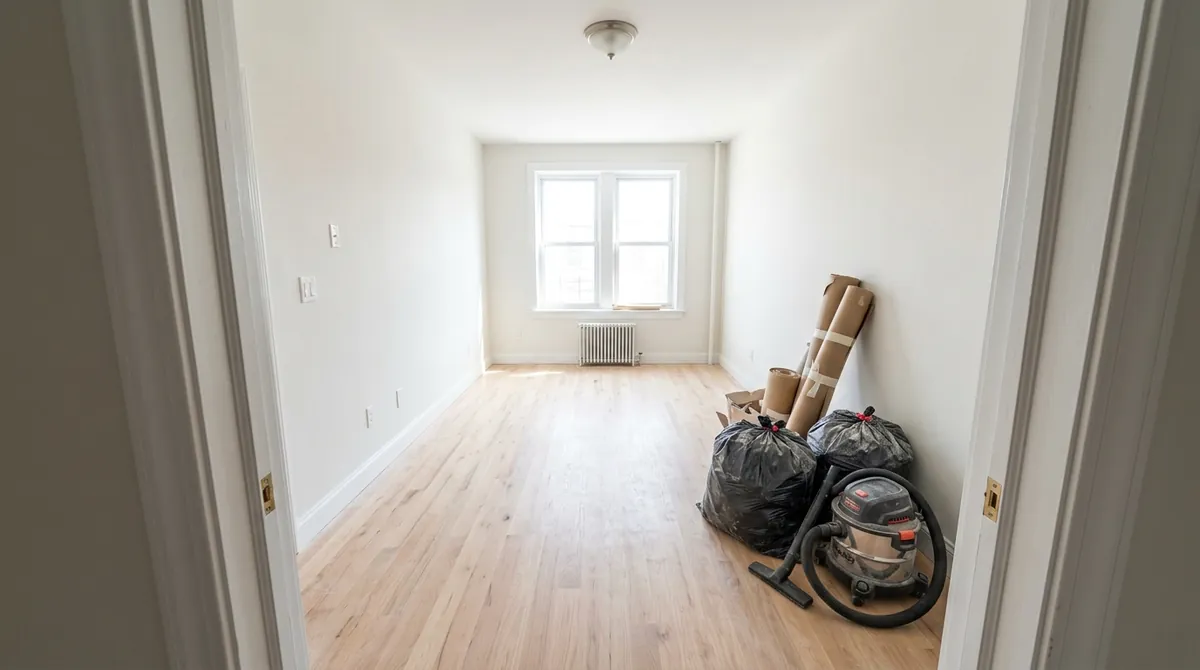
Plan renovation cleanup after the dust-producing work and bulk-debris removal finish, or separate the project into agreed work zones. Before a final cleaning visit, confirm who removes materials and floor protection, provide safe access and required utilities, and identify finishes that are still curing. Share anything that could make the dust hazardous before anyone starts cleaning it.
A walkthrough with the contractor is more useful than choosing a waiting period from a generic checklist. You need to know what work remains, what can be touched, and whether another crew will cut, sand, or open a wall after the clean. Schedule the final pass around those facts.
Settle the contractor-to-cleaner handoff
Read the cleanup terms in your renovation agreement. Ask the contractor to list what they will remove and what you or a cleaning service must handle. Name debris removal and detailed surface cleaning separately; do not leave either hidden under the word cleanup.
Use a written handoff list:
- Rooms and work zones that are complete, plus any areas still in use by trades.
- Remaining sanding, drilling, cutting, painting, or other work that may affect cleaned rooms.
- Tools, unused materials, bulky debris, and sharp waste the contractor will remove.
- Protective board, plastic film, tape, and stickers that must stay in place or need separate removal.
- A site contact who can answer questions about finishes, utilities, and access.
- The walkthrough, photography, furniture delivery, or move-in you are scheduling around.
Send photos if the condition has changed since the estimate. Report a newly opened room, another sanding pass, or cabinets still full of materials so the cleaning provider can confirm the work before arrival.
Keep dust-producing work separate
EPA's remodeling guidance recommends containing dust at its source and keeping it from spreading into occupied rooms. Make containment and construction dust control part of the contractor's work plan. Do not remove sealed barriers because a room looks ready for cleaning; first ask who owns their removal and when that work is complete.
Ask the contractor and HVAC professional how they have protected the system and who will handle its return to use. A fiberglass filter alone does not keep fine construction dust out of equipment or ducts. Leave duct interiors and system decisions to the appropriate professional.
Clear access without disturbing protection
Remove personal belongings from the areas you have agreed to have cleaned. Keep a clear route from the entrance to those rooms and to the client's on-site waste container if the booking requires one. Confirm keys, gate codes, parking or building access, and who will be present to answer questions. Keep children, pets, and people who are not working on the project out of active work zones.
Provide electricity, water, and any other utilities the agreed work requires. Tell the team about disconnected fixtures, exposed wiring, uneven floors, blocked stairs, or any space that needs a trade's attention before entry. A cleaning appointment cannot correct an unsafe work area.
If storage interiors are in scope, clear them before the visit and identify the units to be cleaned. One cabinet door, drawer, or separate open shelf counts as one storage unit in the Mess Fixers construction allowance. Count kitchen and bathroom storage together rather than assuming each room has its own allowance.
Give new finishes their own care notes
Collect care and curing instructions from the contractor or product manufacturer for new paint, flooring, cabinetry, stone, glass, sealants, and coatings. Mark surfaces that are not ready for cleaning; dry to the touch does not necessarily mean ready for wet wiping.
Share material names and permitted methods with the cleaner. Ask before removing tape or film: adhesive, age, and the finish underneath can change the removal risk. Avoid blades on coated glass or strong solvents on an unknown finish.
Treat loose dust and bonded residue as separate tasks. Fine dust may call for dry collection followed by a suitable wipe. Paint drops, cement, adhesive, silicone, and heavy grout haze need their own assessment. Stop if the finish lifts, color transfers, or a mark resists the permitted method. More force can turn a removable spot into surface damage.
Raise hazardous-material questions before booking
If work disturbed paint in a pre-1978 home, resolve the lead-paint question with the contractor before ordinary cleanup. EPA advises treating that paint as lead-based unless an inspection shows otherwise. Required lead-safe cleanup and verification need the appropriate qualified professionals; a visibly clean surface is not proof that lead dust is absent.
Leave suspected asbestos undisturbed. Unknown hazardous dust, mold, sewage, or chemical contamination needs separate assessment, not a household vacuum or a stronger cleaning product.
Match the visit to the current condition
For a completed renovation, compare Post-Construction Final Clean. It includes fine-dust detail on agreed accessible finished surfaces and empty kitchen and bathroom storage within the selected home-size allowance. Window and sliding-door glass, blinds, full wall or ceiling care, and refrigerator, freezer, oven, and dishwasher interiors are separate selections; the installed microwave is included inside and out.
If the site is still between construction stages, Rough Clean may fit agreed loose debris and dry dust instead. It leaves factory films and floor protection in place. Choose by the site's current condition, not the date on the calendar.
For unusually heavy dust beyond the normal Final Clean scope, the Heavy Construction Dust add-on must describe documented extra areas, volume, or passes. It is not a second charge for dust removal already included in the service.
Plan around new settling and returning trades
Avoid relying on a universal number of hours or days for dust to settle. Air movement, untreated areas, returning trades, and furniture deliveries can change the property after a completed pass. Ask what will happen between the clean and the next walkthrough, and keep notes or photos of the agreed finished condition.
Post-Construction Touch-Up is a limited return after a completed Final Clean for light new dust, footprints, smudges, and isolated marks. Widespread dust, renewed construction, bonded residue, or unfinished details need reassessment. Another wipe-down will not stop an active dust source.
Confirm the handoff before the team leaves
Review the booked areas and document any visible exceptions, protected surfaces, or work left for a trade. Keep a separate list for missed scope and for new marks made after cleaning. That distinction helps you request the right response without treating every later footprint as unfinished construction cleaning.
Cleaning does not guarantee inspection approval, occupancy clearance, or acceptance by an owner or contractor. Compare the Final Clean checklist, share your project handoff notes, and confirm any separate selections before booking.