How to Organize Kitchen Cupboards Before and After Cleaning
By Mess Fixers
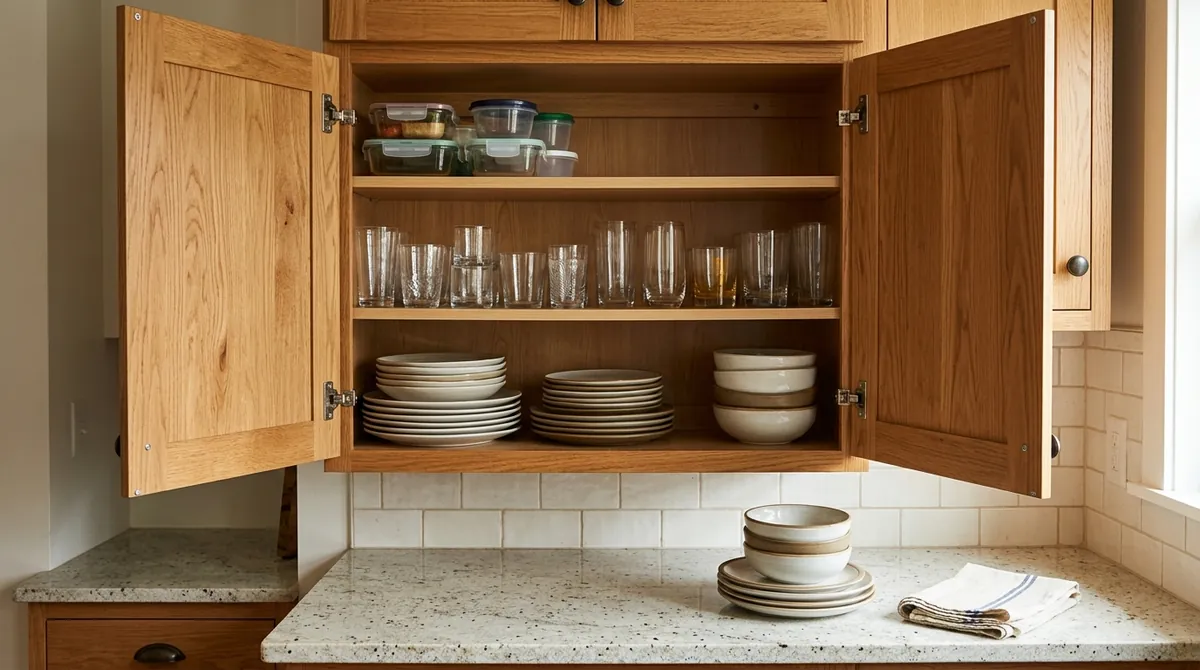
To organize kitchen cupboards, empty one manageable section, sort its contents, clean and dry the accessible interior, then return items in groups you use together. Keep everyday items within reach and place heavy cookware low. Finish one section before opening another so the kitchen remains usable while you work.
Decide what you want to keep and where it belongs before buying organizers. A shelf riser or container can help only after you know the contents, available space, and shelf limits. Cleaning the emptied unit also gives you a chance to notice moisture, loose surfaces, or damaged packaging before covering the shelf again.
Start with one cupboard and a clear work area
Clear enough counter space for the contents of one cupboard or drawer. Set aside a place for items you will keep, belongings that need a decision, and anything you have decided to discard. Keep food away from cleaning products throughout the project.
Take a quick photo if you want to preserve a working arrangement or need another household member's input. Remove loose contents without forcing stacked items out. Leave fixed shelves, runners, hinges, and plumbing in place. If a unit feels loose or a shelf sags, stop loading it and have the cabinet assessed before putting heavy items back.
Sort food without treating dates as the whole answer
Check the package's storage directions and condition as well as its date. FDA explains that many date labels describe quality rather than food safety. A product is not automatically unsafe because a best-quality date has passed, and an unexpired date does not make spoiled or badly stored food safe. Infant formula has a use-by requirement; follow that date.
Discard food with signs of spoilage and do not taste questionable food to decide whether to keep it. Follow FDA guidance for damaged cans: swelling, leakage, punctures, deep rusting, and severe dents that interfere with normal opening or stacking are warning signs. Keep an uncertain item out of the rest of the stock while you check the manufacturer's advice or a suitable food-safety resource.
Group duplicate pantry items before returning them. University of Minnesota Extension recommends using older products before newer ones and opened packages before unopened ones. Put those items where you can see them, while still following each package's storage directions. Keep labels and cooking instructions with any food you move into a container.
Check for pests, moisture, or a failing finish
Pause the ordinary reorganization if you find webbing, insects, leaking containers, damp shelves, or a musty area. Identify the cause before lining the shelf or packing it full again. Cleaning cannot repair a leak or restore swollen particleboard, lifting laminate, or peeling paint.
For food that contains pantry insects, University of Minnesota Extension recommends discarding the infested food and cleaning the storage area, including crumbs in cracks and corners. It warns that insecticides are not recommended in stored-food cupboards and that washing shelves with bleach, ammonia, or disinfectant will not keep pests from returning. Seek identification or further advice from an extension service or the appropriate pest professional instead of applying chemicals around food.
Remove loose debris before wiping
Lift out loose, nonadhesive shelf liners if you can do so without pulling the finish. Remove crumbs and dry debris from accessible shelf surfaces and corners with a soft brush or a vacuum attachment suitable for the finish. Do not dig into joints with a knife or take drawer mechanisms apart to reach behind them.
If an adhesive liner resists removal, stop. Peeling harder or adding a solvent can damage the surface underneath. Check the cabinet and liner instructions before deciding how to proceed. Tell a cleaning service about stuck liners in advance; routine interior wiping does not include adhesive-liner removal.
Match the wipe-down to the cabinet material
Find the cabinet maker's care instructions if you know the brand or finish. Test any permitted cleaner in a small inconspicuous area and let it dry before using it across the cupboard. Use clean, soft cloths so residue from another cleaning job does not reach the shelves.
For finished wood, IKEA's kitchen care guide recommends a soft lint-free cloth and mild soap, followed by removal of the soap residue and prompt drying with a clean cloth. Keep the cloth damp rather than wet, and avoid standing water along edges and joints. Follow the cleaner's label for use and any dilution; do not improvise a mixture. Unknown, raw, damaged, or refinished wood needs its own care instructions before wet cleaning.
For laminate, the American Cleaning Institute recommends a nonabrasive all-purpose cleaner and warns against abrasive products and cleaners containing bleach. Remove cleaning solution promptly to limit discoloration or water damage. Do not use scrapers, steel wool, sandpaper, or knives on stains. Laminate edges and exposed seams still need low-moisture care.
For painted, coated, or high-gloss cabinet surfaces, follow the cabinet maker's approved method. A cleaning instruction for a matte solid-surface countertop does not apply to a glossy cabinet door or shelf. Stop if the cloth picks up finish color, the surface softens, or the coating lifts. Avoid ammonia and abrasive powders, which IKEA's cabinet guidance excludes.
Wipe accessible areas without flooding hinges or joints, remove product residue as the instructions require, and dry the surfaces. Leave the unit open until it is dry before returning dishes or food. Do not mix cleaners or store bottles beside pantry items.
Return contents around the way you cook
Use your normal tasks to choose locations. Keep mugs near the place you make drinks and pans near the place you prepare meals, provided the storage position is suitable. Move occasional serving pieces out of the easiest-to-reach area so everyday items do not sit behind them. Put heavy cookware in lower storage instead of above your head.
Match container lids to bases and keep only the combinations you want to use. Group baking supplies, breakfast items, or meal-prep containers so you can remove one group without unpacking a shelf. Leave enough room to take items out without balancing other things at the edge.
Use shelf risers, bins, or dividers only when their dimensions and load ratings fit the cabinet. Follow the cabinet's shelf capacity and the organizer's installation instructions. Avoid drilling, adjusting hardware, or hanging a loaded rack from a door unless the cabinet maker allows it.
Liners are optional. IKEA recommends compatible plastic or felt liners to limit wear, but any liner must suit the surface and leave the unit usable and dry. Check beneath it when you clean. Do not use a liner to conceal sticky residue, dampness, or damaged shelves.
Keep the arrangement workable
Check the shelf as you put groceries away. Place older and opened products where you will use them first, remove spilled food, and avoid buying duplicates you cannot see or store. Revisit the layout when reaching an item requires moving several unrelated things. You can change one shelf without emptying the entire kitchen again.
Keep cleaning products in a separate storage area away from food and inaccessible to young children and pets. FDA and ACI both advise separating food from household chemicals. A convenient cupboard beside the pantry is useful only if its contents and access are appropriate.
Decide which parts need cleaning help
Mess Fixers Deep Clean includes detailed cabinet-front washing, while occupied cabinet, drawer, and shelving interiors remain outside the base service. Sorting possessions and deciding what to throw away require your instructions.
If you need help with occupied cabinet interiors, confirm what is currently available before booking. Agree on which units need cleaning, who handles the contents, and which fragile or private items must remain untouched. Do not assume that a home-cleaning visit includes pantry sorting, food disposal, or contents handling.
For a move-in or move-out, Inside Cabinet Wipe (Empty) covers additional empty units beyond the selected Move service's allowance. One cabinet door, drawer, or separate open shelf counts as one unit. Standard Move-In and Express Move-Out use dry debris removal and spot wiping; the Deep Move services include a full accessible interior wet wipe. Empty the selected units before the visit and flag stuck liners or finish damage.
Choose the scope that fits your kitchen before booking. Keep the food and storage decisions in your hands, then agree on which units need cleaning and who will handle the contents.