Fridge Cleaning: Protect Food and Clean the Interior
By Mess Fixers
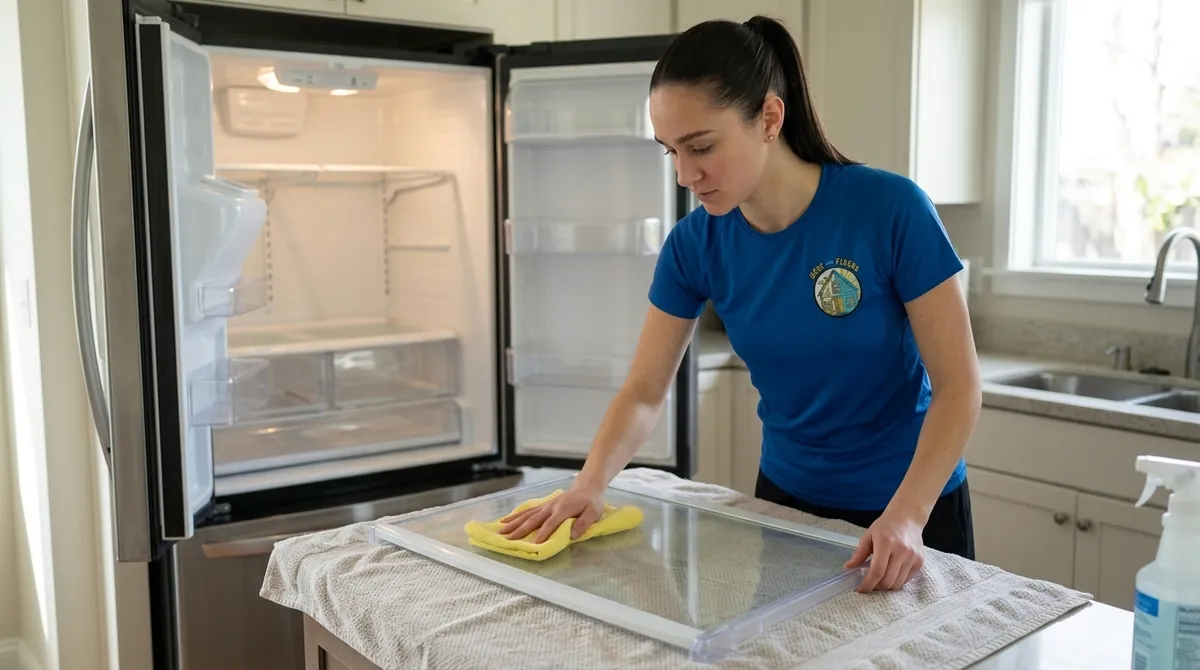
For fridge cleaning, arrange cold storage for the food first, then follow your model's instructions for removing shelves and wiping the interior. Hand-wash suitable removable parts, let cold glass reach room temperature before washing, and dry the cleaned parts before putting them back. Use only a cleaner the appliance maker permits on the surface you are cleaning.
Set Up Cold Storage Before Opening the Door
Put a cooler with ice packs or another working refrigerator within reach before you unload perishables. Whirlpool recommends cooler storage during interior cleaning. A clear counter gives you room for shelves and towels; it should not be your holding place for the whole refrigerator's perishable contents.
FDA recommends a refrigerator temperature of 40°F or below. Check with an appliance thermometer rather than assuming the numbered control dial tells you the temperature. Keep raw meat and poultry separate from ready-to-eat food while you stage the contents, as FDA advises for food storage and handling.
CDC says not to leave food out of the refrigerator for more than two hours during cleaning. FDA's room-temperature limit for perishable foods is one hour when the air temperature is above 90°F. Plan to keep the food cold instead of using either limit as a cleaning timer. If you cannot arrange cold storage for the job, postpone the full clean.
Pick the Job You Can Finish
- A small fresh spill: Clear the affected space, keeping perishable food cold, and follow the appliance manual's wiping instructions. A spot wipe does not require you to strip the entire compartment.
- Residue across shelves and drawers: Stage the contents in cold storage, prepare a drying area, and work through the removable parts and empty interior.
- Recalled food in the refrigerator: Start with the recall instructions and CDC's recall-specific refrigerator guidance. This routine cleaning guide does not replace that cleanup plan.
- A cracked shelf, damaged liner, electrical problem, or persistent problem beyond reachable residue: Stop and contact the appliance maker or a qualified repair service. More cleaner is not a repair.
Follow the Manual Before Taking Out Parts
Find the care instructions for your exact model. Check the approved cleaner, removable parts, and power or cooling-control directions before starting. Whirlpool says to unplug or turn off cooling for a deep clean if the model allows it. Follow your own manual rather than applying that instruction to every refrigerator.
Keep the refrigerator in place. If a required control or plug is inaccessible, arrange safe assistance rather than pulling the appliance out or reaching behind it. Leave fixed panels, wiring, lights, drains, and ice-maker assemblies alone. Only remove shelves, bins, and drawers intended for user removal, using the manual's directions; stop if a part catches or needs force.
Wash the Parts and Wipe the Interior
- Move food into the prepared cold storage. Set aside anything needing a separate recall or food-safety decision; do not put it back just to clear the counter.
- Remove the permitted shelves, bins, and drawers. Let cold glass come to room temperature before washing it. Both CDC and Whirlpool warn that hot water on cold glass can crack it.
- Hand-wash the suitable removable parts with the mild detergent and water temperature your manual permits. Rinse and dry them. Do not assume dishwasher permission from a different model or from a shelf that looks similar.
- Use a soft cloth with the approved cleaner to wipe reachable walls, door liners, and drawer spaces. Apply cleaner to the cloth rather than flooding the compartment. Whirlpool cautions against soaking seams or dripping into vents.
- Wipe accessible door-seal folds with a damp cloth and a product permitted for the gasket. Remove reachable crumbs without pulling the seal out. Dry the folds.
- Complete any clean-water wipe required by the product or appliance directions, then dry the interior. Reinstall the dry parts in their original positions.
- Restore cooling as the manual directs. Check that the refrigerator is back at FDA's recommended 40°F or below before returning perishable food from cold storage.
Keep moisture away from controls, lights, and other electrical parts. A cloth suitable for wiping a shelf is not permission to wet a connected assembly or spray into an opening.
Keep the Product Choice Narrow
Whirlpool's interior-care page excludes abrasive or harsh cleaners, window sprays, flammable fluids, concentrated detergents, bleach, and petroleum-based cleaners from its plastic parts, liners, and gaskets. Those are Whirlpool's material limits; the care instructions for your own appliance govern what you can use. Choose an approved mild detergent and follow its directions, without adding another cleaner or improvising a recipe.
A stubborn patch does not justify a scouring pad, a sharp scraper, or a stronger solvent. Stop if the permitted method does not lift the residue without force. Cleaning reachable food residue cannot guarantee removal of permanent discoloration or odors from hidden or mechanical areas.
Finish the Food and Cleanup Decisions
Check the food's holding history before restocking. FDA cautions that appearance, smell, and taste do not establish food safety. Do not taste food to decide whether warming during the job was acceptable; if its temperature history is uncertain, follow FDA's disposal guidance rather than returning it on a guess.
Wipe suitable container exteriors before returning them, leave room for air to circulate, and clean the counter used for food and refrigerator parts. Wash the cleaning towels before reusing them.
Choose the Right Mess Fixers Refrigerator Add-On
A household wipe-down and a booked visit have separate scopes. Inside Fridge (Empty) covers one refrigerator that you have emptied, including accessible walls, shelves, bins, drawer areas, and door-seal folds. Food removal is outside that selection.
Inside Fridge (Occupied) includes agreed temporary handling and return of food. Tell Mess Fixers what not to touch and agree on staging before the visit. The team does not discard food without your instruction. The current occupied-fridge selection pairs with Standard Clean, Deep Clean, Standard Turnover, and Deep Turnover, not the move-out services.
The refrigerator stays in place. Freezer interiors are a separate selection; fixed panels, blocked drains, appliance faults, and repair remain outside refrigerator interior cleaning. Before booking, confirm whether the appliance will be empty, how food will stay cold, and which surfaces need attention.