Deep Cleaning Checklist: A Room-by-Room Plan
By Mess Fixers
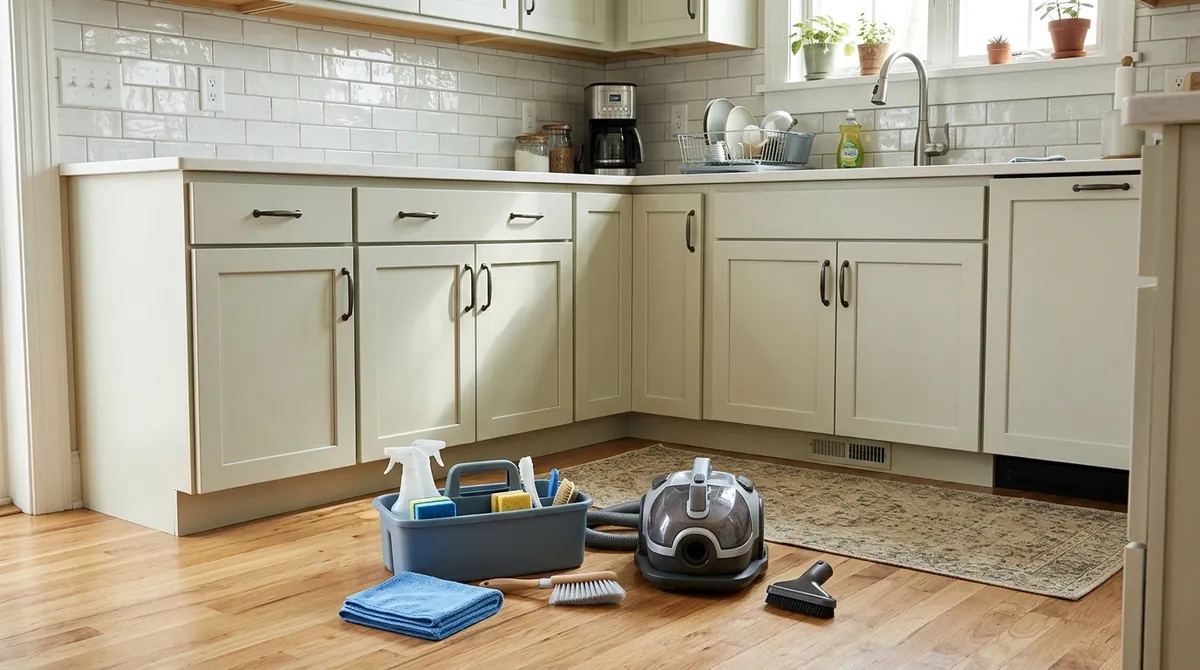
A deep cleaning checklist should cover the surfaces you skip during routine upkeep: cabinet fronts, baseboards, shower tracks, edges, and reachable spaces beneath furniture. Start by clearing access and checking surface-care instructions. Work through one room at a time, remove loose dirt before wet cleaning, and finish with the floors. Mark appliance interiors, window glass, and other focused jobs as separate tasks so you can plan them or request them in a quote.
Prepare the Rooms and Supplies
- Pick the rooms you can finish in the time available. You can split the checklist across several days.
- Clear counters and floors. Set fragile objects aside, and leave heavy furniture and large appliances in place unless you have arranged safe access behind them.
- Check the care instructions for floors, counters, cabinet finishes, and appliances. Choose products labeled for those surfaces.
- Gather a vacuum or broom, soft cloths, a mop, and the surface-appropriate cleaners. Keep clean cloths apart from used ones.
- Read product directions for dilution, rinsing, protective equipment, and ventilation. Never mix cleaning products.
Keep routine work on the list, but give the extra detail its own time: cabinet fronts and interiors, baseboards, shower tracks, and reachable areas beneath furniture. A DIY checklist is not a service inclusion list; compare any hired visit with its published scope.
Kitchen Checklist
- Counters and backsplash: Move suitable small items, remove crumbs, clean with a product approved for the material, and follow its rinse and drying directions before replacing items.
- Cabinet fronts and handles: Remove loose dust, then clean doors, edges, handles, and toe kicks with a finish-compatible product and soft cloth. Dry the surface without leaving water around seams.
- Stovetop and microwave: Let hot surfaces cool. Follow the appliance instructions for the stovetop and microwave interior, including any restrictions on coatings and controls.
- Appliance exteriors and hood: Wipe accessible exteriors and the hood controls. Put the hood underside, grease filters, and appliance interiors on a separate list; check their manuals before starting.
- Sink and faucet: Clear the basin, wash away residue, rinse, and dry where the material permits. Check the finish instructions before attempting mineral-deposit removal.
- Trash area: Empty the bin, clean suitable bin surfaces and reachable drips around it, and let it dry before fitting a replacement liner.
- Cabinet interiors: Choose the units to empty, clean their accessible shelves and edges, dry them, and return the contents. Keep this task separate from washing the fronts.
Keep drain openers, oven cleaners, and other strong acidic or alkaline products off kitchen countertops. Follow the surface maker's care guide, and stop if a finish softens, loses color, or shows damage during a small-area test.
Bathroom Checklist
- Clear the vanity and clean the counter, basin, faucet, and mirror with products approved for each material.
- Clean the shower or tub, then inspect corners, hardware, shower-door tracks, and grout for remaining surface buildup. Use only methods the surface maker allows.
- Clean the toilet bowl with its designated product and tool; clean the seat, lid, exterior, and reachable floor around the base with separate cloths.
- Wipe cabinet fronts and handles, and clean the floor after the higher surfaces.
- Launder washable bath mats, towels, and shower curtains according to their labels. Let them dry before returning them.
Stop at loose grout, damaged caulk, peeling coatings, or moisture damage. Surface cleaning cannot repair those conditions. Suspected mold growth or recurring moisture needs separate assessment; this checklist does not cover remediation.
Bedrooms and Living Areas
- Dust reachable shelves, furniture, door frames, and light-fixture exteriors. Keep fixture components and vent grilles in place.
- Follow the manufacturer's instructions for electronics; keep wet household-cleaning methods off screens and electrical openings.
- Vacuum suitable upholstery, including reachable seams and areas beneath cushions that you can lift without damage. Check fabric-care instructions before any wet treatment.
- Dust baseboards, then wipe compatible trim with controlled moisture and dry it. Stop where the finish is loose or worn.
- Vacuum under accessible beds and behind light furniture you can move without risking the floor or the item. Leave blocked areas on the unfinished list.
- Wash bedding and removable covers only as their care labels permit. Plan enough time and drying space before starting a bulky load.
- Vacuum or sweep floors, then mop compatible hard surfaces according to the floor maker's instructions.
Laundry Room and Entry
Wipe washer and dryer exteriors and accessible shelving. Follow the machine manual for door seals, controls, and the user-accessible lint screen. Leave exhaust ducts, wiring, and internal appliance parts to the appropriate service provider. At the entry, lift a manageable mat, remove the dirt beneath it, clean the threshold, and finish the floor with its approved method.
Keep Deep Cleaning Separate from Disinfecting
CDC defines cleaning as removing dirt, impurities, and germs from surfaces. It advises cleaning before sanitizing or disinfecting and says routine household cleaning is enough in most situations. A deep-cleaning checklist does not establish a disinfection procedure. If you need disinfection, use the guidance and product label for that purpose, including the required wet contact time. Never combine products to make a stronger cleaner.
Compare the Checklist with a Mess Fixers Booking
Mess Fixers' Standard Clean covers recurring upkeep. Deep Clean adds the detailed work in its published checklist, including cabinet-front washing, baseboard washing, deeper bathroom surface care, and suitable floor cleaning. The team cleans accessible areas and does not move heavy furniture or large appliances. Ordinary safe items in one accessible layer can be handled as the checklist permits; clear dense or fragile groups before the visit.
Confirm focused work apart from the base checklist:
- Oven, refrigerator, freezer, and empty dishwasher interiors need separate selections; the microwave interior is included.
- Window glass, sliding-door glass, deep window tracks, screens, and wet blind wiping have their own selections. Window Detailing describes the work for one chosen window.
- The hood's accessible exterior and controls are base care. Range Hood Degrease covers its accessible underside, heavy buildup, and suitable washable metal filters, excluding ducts and the motor.
- Occupied storage interiors and laundry processing do not belong to the Deep Clean base checklist. Linen Change and laundry processing are not offered with Deep Clean.
Mark completed, blocked, and separately planned tasks as you work. Before hiring, compare your list with the service checklist, specify the areas and quantities you need, and note sensitive finishes and do-not-touch items. Mess Fixers asks for approval before extra work or a price change.