How to Clean a Glass Stove Top
By Mess Fixers
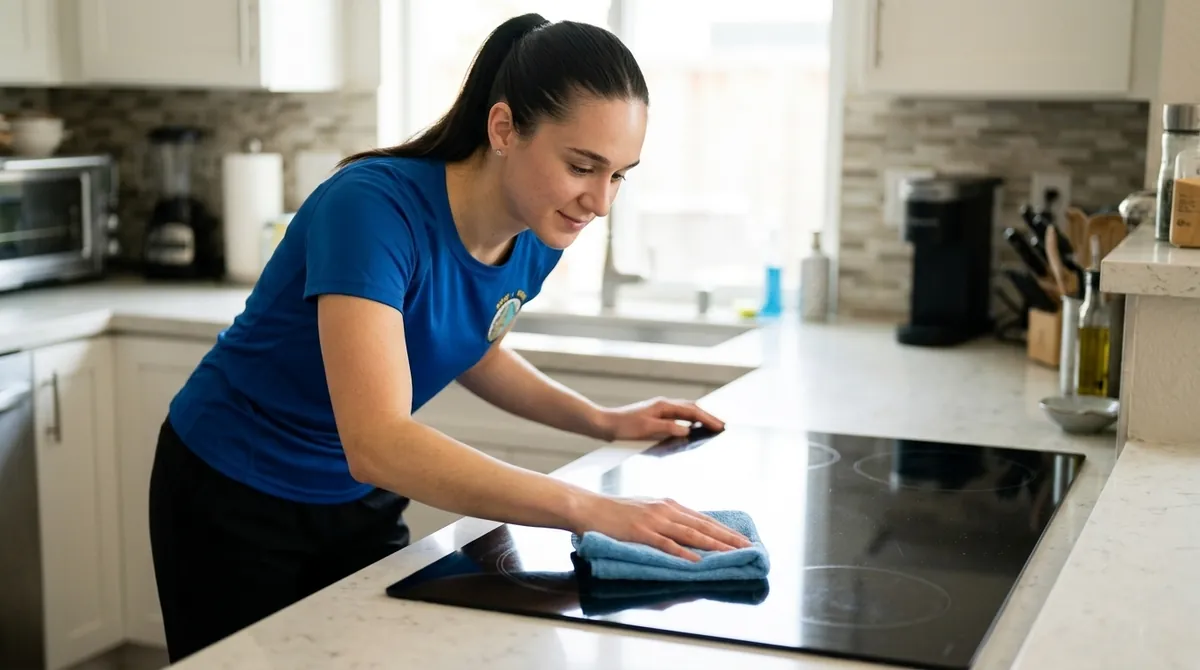
For ordinary residue on a glass stove top, turn the controls off and let the surface cool before applying a model-approved cooktop cleaner. Wipe with a fresh cloth or approved pad, then remove the cleaner before heating the surface again. Burned-on food may need a purpose-made cooktop scraper; follow your appliance's scraping sequence rather than choosing a blade angle or temperature from a general guide.
Sugar, syrup, and melted plastic need a different response. Some manufacturers require removal while the spill is hot to prevent pitting. Read the exception below before treating one of those spills as an ordinary dried-on stain.
Find the instructions for your surface
A smooth top can cover radiant electric elements or induction coils. Start with the model number and its owner's manual, rather than assuming a method for another smooth-top range will fit yours. Check for special coatings and any limits on cleaners, pads, or scrapers. If you cannot identify the surface, ask the manufacturer before using a blade or an abrasive.
Gather a clean soft cloth, the cleaner named or allowed in the manual, and any approved pad. Keep the scraper in its holder if your instructions call for one. Put kitchen knives, metal scrubbers, and household cleaning experiments aside.
Clean ordinary cooking residue
- Turn all surface controls off. Wait until the top has cooled before applying cleaner. Do not test the temperature with your hand or lay a wet towel over a hot element.
- Remove loose food with a clean soft cloth without dragging gritty crumbs across the surface.
- Apply the approved ceramic-glass cooktop cleaner as directed on its label and in the appliance manual. Use only the pad or cloth the manufacturer permits.
- Work on the residue without extending the product onto seals, trim, or controls that need a different method.
- Remove the cleaner with a fresh cloth or paper towel if the instructions allow it. Follow any rinsing, drying, or buffing directions.
- Check the surface before cooking again. Leave no cleaning cream or loosened food behind.
GE's support instructions allow a dry cloth or paper towel to remove its recommended cleaning cream and warn against heating the cooktop before the cream is gone. Whirlpool's ceramic-glass procedure has a different order: it starts with the scraper on a warm, not hot-to-the-touch surface, then requires cooling before the cleaner step. Follow the sequence for your appliance; do not combine selected steps from both.
Use a scraper only where your manual allows it
A purpose-made ceramic-glass scraper can lift stuck food that wiping leaves behind. It is a held tool with a clean, undamaged blade, rather than a loose razor blade or a kitchen utensil. Check that the blade is secure and follow both the appliance and tool instructions. Keep the working edge on the residue and away from the cooktop's perimeter seal.
Whirlpool specifies a scraper designed for ceramic glass at about 45 degrees, with an oven mitt for its warm-surface scraping stage. GE also gives an approximately 45-degree angle for heavy burned-on residue, but starts that procedure on a cooled top. Those instructions are model and brand guidance, not a universal angle or temperature rule. Stop if the blade catches, the edge is nicked, or you cannot control the tool.
After scraping, complete the approved cleaner and wipe-off steps. A ring that remains after the permitted process needs assessment before another tool or stronger chemical. More pressure may leave a scratch without removing the mark.
Choose a cooktop cleaner, not a window cleaner
The word glass on a bottle does not make it suitable for a cooking surface. Whirlpool tells owners to avoid steel wool, abrasive powder cleansers, chlorine bleach, rust remover, and ammonia. Use a cleaner formulated for ceramic-glass cooktops that your model permits, along with its approved pad.
Skip oven cleaner, pumice stones, car wax, and sharp kitchen tools. Avoid mixing products or adding ingredients to a commercial cleaner. Even a familiar homemade paste can conflict with the finish instructions. A used dishcloth may also leave grease or detergent film, so start and finish with clean cloths.
Treat sugar and melted plastic as an exception
GE warns that sugary spillovers and melted plastic can pit the glass if they remain until cold. Its procedure calls for turning off the elements, removing hot pans, and using an oven mitt and a new sharp scraper to move the spill to a cool area, then removing it with paper towels. Remaining spillover waits until the top has cooled. GE says not to use the elements again until all residue is gone.
Use that procedure only if it matches your appliance's instructions and you can carry it out without reaching across hot elements. Do not pour cleaner or water onto hot glass. If you lack the required tool, cannot reach the spill without a burn risk, or see pitting, contact the manufacturer for help. This exception is not a reason to scrape ordinary food from a hot surface.
Separate residue from damage
GE identifies some white marks or metallic-looking areas as mineral deposits from evaporated water and food. It also describes metal marks from cookware. Start with the approved cleaning method for those deposits instead of assuming the glass needs a harsher treatment.
A crack, chip, pit, or indentation needs service advice. Stop using a cracked cooktop, turn it off, and contact the manufacturer. Do not try to polish out a scratch, repair a seal, lift the top, or pry off material bonded to the glass. GE says glass with pitting or indentations requires replacement; cleaning cannot restore the missing surface.
Keep cooktop work separate from oven and hood work
Mess Fixers Standard Clean includes routine stovetop cooking residue and grease. Deep Clean covers heavier baked-on grease within its listed scope, with methods chosen for the material and condition. Neither service promises to repair scratched, etched, or heat-damaged glass.
The Inside Oven add-on covers the oven interior, not the stovetop. The Range Hood Degrease add-on addresses the accessible underside, heavy grease, and suitable removable washable metal filters. Hood motor and duct work remain outside that scope.
For help with buildup that your approved household method leaves behind, compare the service checklists before booking. Share the appliance model and any cracks, coating concerns, or persistent marks so the team can assess the work before treating the surface.