How to Clean a Garbage Disposal Without Reaching Into It
By Mess Fixers
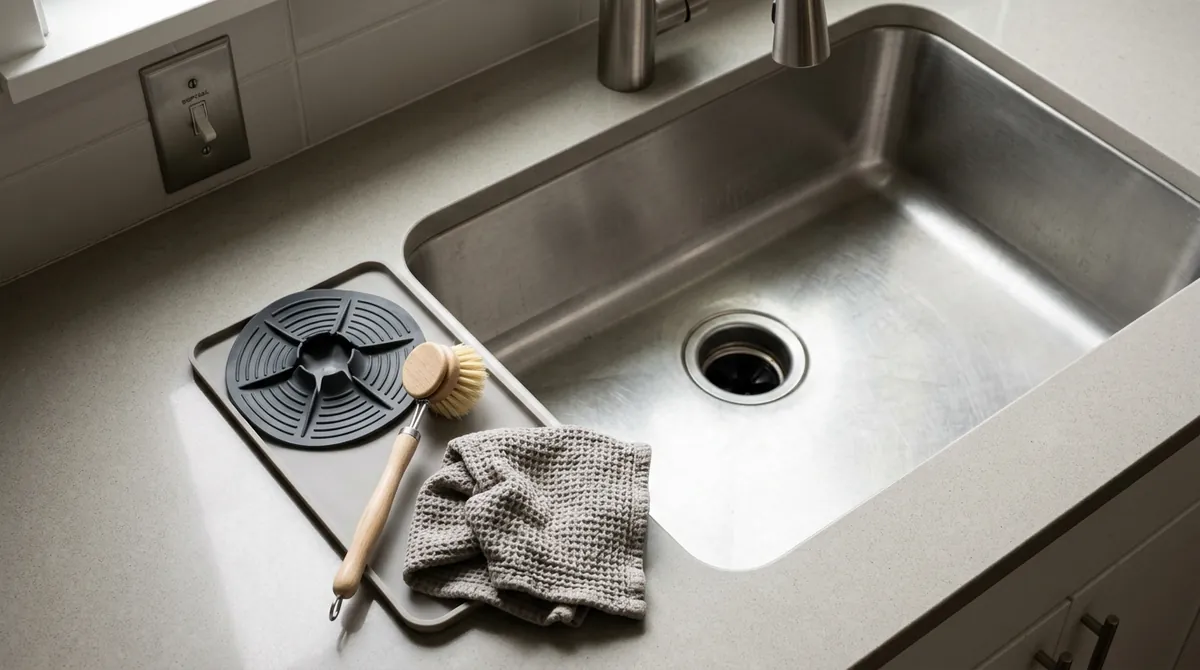
To clean a garbage disposal, disconnect its power first, keep your hands out of the drain, and clean the splash guard or baffle only as your model's instructions permit. Food residue can collect on the underside of that rubber guard. Clean reachable surfaces with the approved method, then put the guard back in its operating position before restoring power. A jam, leak, standing water, or electrical symptom needs service rather than a cleaning experiment.
Start with Power Isolation
- Turn the disposal switch off. Unplug the unit at an accessible plug, or switch off its circuit breaker. If you cannot identify how to disconnect its power, stop and get help before cleaning near the opening.
- With hands and tools clear, try the disposal switch to confirm that the unit does not start. Return the switch to off and leave the power disconnected while you clean.
- Keep fingers out of the chamber even with the power disconnected. Leave trapped objects and jams to the model's service instructions or an appropriate technician; this guide covers surface cleaning only.
Check Which Guard Your Model Has
The rubber guard at the drain opening may be called a splash guard or a baffle. InSinkErator explains that food waste can accumulate beneath it. Its Evolution Series cleaning guide describes a baffle designed to lift out for cleaning. That feature does not establish that another model's guard is removable.
Find the brand and model on the unit or its paperwork and read its cleaning instructions. Leave a fixed guard in place. Do not loosen fasteners, pry a guard out, or detach the disposal to reach it. If its underside cannot be cleaned without putting your hand or a tool into the chamber, leave that area for the appropriate service provider.
Clean the Accessible Splash Guard
- A guard designed for tool-free removal: Follow the manual to lift it out after disconnecting power. Clean the removed guard with the permitted product and tool, paying attention to the underside and folds. Rinse it and return it to its required position before operating the unit.
- A fixed guard: Use only the accessible cleaning method its manual permits. Keep your hands and tools out of the chamber, and leave any inaccessible buildup in place.
- A torn, loose, or damaged guard: Stop and arrange the model-appropriate service. Do not run the disposal with a required guard missing or out of position.
Restore the Guard Before Running Water and the Unit
After cleaning, check that the guard and any required stopper or cover are in their operating positions. Remove cleaning tools from the sink area and keep people clear of the opening. Restore power only after the cleaning work has ended. Run the unit with the water flow and operating sequence its manual specifies; the InSinkErator cleaning guidance uses a stream of cool or cold water.
Stop at a new or persistent abnormal noise, a burning smell, leaking water, a tripped breaker, or a unit that hums without operating. Disconnect power if you can do so without approaching water or another hazard, and contact a qualified service provider. Do not keep restarting the unit or use a cleaner to try to clear a jam.
Ice and Citrus Have Model Limits
InSinkErator describes ice and citrus methods for its disposals, but it also says ice can melt before it cleans the grind chamber. Its units use impellers or lugs and a stationary grind ring rather than blades, so ice does not sharpen blades. A temporary citrus scent also does not establish that you removed residue from under the baffle.
Use an ice, citrus, or commercial disposal-cleaning product only if your model's instructions permit that method, and follow those directions without adding a second product. A recommendation for one brand does not confirm what another unit, its plumbing, or its wastewater system can accept. Cleaning the reachable guard and managing what goes down the sink remain useful tasks even if you skip a deodorizing method.
Keep Cleaner Mixtures Out of the Drain
InSinkErator's FAQ tells users to keep fats, oils, harsh cleaning products, and non-food items out of its disposals. Do not pour drain cleaner, bleach, or a homemade chemical mixture into the chamber for this cleaning job. Never mix cleaning products. Use only the cleaning method your appliance permits.
Standing water or a sink that will not drain needs separate assessment. Cleaning the guard does not clear a blocked pipe. Leave drain clearing, jam removal, reset procedures, wiring, and appliance disassembly outside this routine.
Separate Kitchen Cleaning from Appliance Service
Mess Fixers' Standard Clean includes sink and faucet cleaning. Its Deep Clean checklist adds a limited disposal detail: the team cleans the accessible underside of the baffle edge when it can lift without tools or disassembly. That scope does not include reaching into the grind chamber, clearing drains, repairing the unit, or taking it apart.
Describe an odor, inaccessible guard, drainage problem, or existing appliance damage before booking. Use a cleaning visit for the accessible kitchen surfaces in its checklist, and arrange a plumber or appliance technician for the service work outside that scope.