How to Clean a Fabric Couch: Read the Care Code First
By Mess Fixers
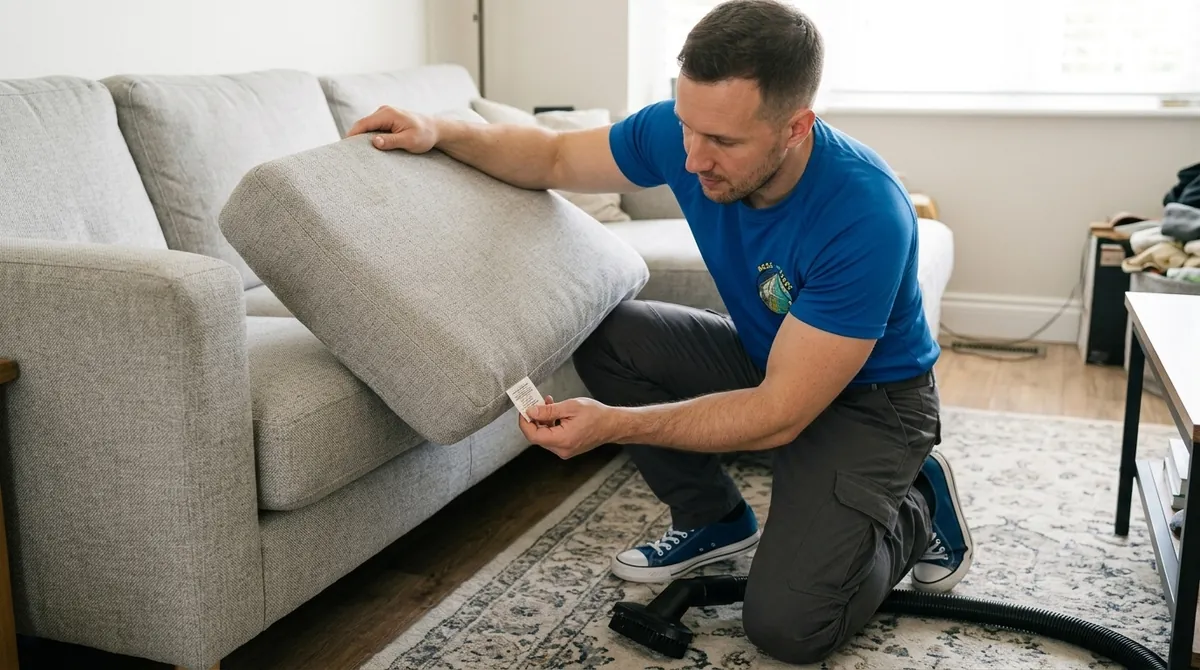
Clean a fabric couch by finding its care tag before choosing a cleaner. W permits a water-based upholstery method; S calls for a solvent-based method; WS or SW permits either; X limits home care to vacuuming or light brushing. Follow the furniture maker's instructions, vacuum loose soil first, and test any permitted cleaner in a hidden area. A fabric couch's appearance alone cannot tell you whether water or steam belongs on it.
Find the Tag and Choose Your Path
Look beneath loose seat cushions or under the couch for the manufacturer's care tag. Ashley Furniture identifies those locations in its cleaning-code guide. A couch may use different fabrics on different parts, so check each relevant tag before treating a cushion, arm, or decorative panel.
The Drycleaning & Laundry Institute publishes these core code meanings:
- W: use the foam from a water-based upholstery cleaning agent, following the furniture and cleaner instructions. Avoid soaking the fabric.
- S: use a professional furniture cleaner for solvent-only treatment. Do not substitute water or a water-based detergent.
- WS, SW, or W-S: the tag permits a water-based or mild solvent-based spot-cleaning method. Choose a method the manufacturer allows and test it before treating a visible area.
- X: vacuum or use light brushing only. Keep water-based and solvent-based cleaners off the fabric.
Manufacturers also use codes outside this list. If the tag has another code, gives separate instructions, or has gone missing, contact the maker with the model and fabric information. Keep care to dry soil removal while you confirm the method; do not guess a code from the word polyester, linen, or microfiber.
Vacuum Before Working on a Spot
Use an upholstery attachment on the seats, backs, and arms, then a crevice tool along accessible seams and cushion gaps. Pick up coins and other loose objects first. Lift removable cushions only when you can handle them without pulling on the fabric or straining yourself, and vacuum the accessible area beneath them.
Work with the direction of the fabric's nap where applicable. This Old House recommends vacuuming before deeper cleaning so you do not work surface dirt farther into the fabric. On delicate fabric, check the maker's guidance for the attachment and suction setting. Stop if the attachment catches threads or disturbs the pile.
Test the Cleaner Before You Treat the Stain
A care code gives you a category of method, not approval for every cleaner in that category. Read the cleaner's upholstery and material restrictions, along with its application, residue-removal, and ventilation directions. Choose a hidden area of the same fabric as the stain.
Apply the permitted product as directed to that test area. Use a clean white cloth to check for color transfer, and let the fabric dry before looking for a ring, color change, stiff texture, or altered pile. Any of those changes means you should stop that method. Do not move to the visible stain because the test looked acceptable while wet.
Spot-Clean Water-Compatible Fabric
Use the following sequence only for fabric whose tag and manufacturer permit the selected water-based method, such as suitable W or WS upholstery:
- Blot a fresh liquid spill with a dry white absorbent cloth. Use a clean part of the cloth as it takes up liquid.
- Remove loose dry debris with the vacuum before applying the cleaner.
- Apply the product with the foam or application method the furniture maker and product label specify. Keep the amount small enough to avoid saturating the fabric and padding.
- Blot from the edge of the spot toward its center. Avoid rubbing or scrubbing, which can spread the stain and distort the fabric.
- Follow the product's directions for removing residue. If the method calls for a damp rinse cloth, wring it out and keep moisture controlled.
- Blot remaining moisture with a dry cloth and allow the fabric to dry before judging the result or treating it again.
Stop if color transfers, the stain spreads, or the surface changes texture. Repeated wet passes can leave you with more damp upholstery without removing the original mark. A stubborn stain or broad overall soiling warrants a professional assessment.
Dry the Couch Before Reassembly or Use
Leave cleaned parts exposed to room airflow and use a fan if appropriate. Keep removable cushions off their usual seating position until all cleaned surfaces have dried. This Old House advises allowing complete drying before replacing cushions and avoiding heated air from a hair dryer or space heater.
A fixed drying-time promise will not tell you whether the padding is still damp. If the couch remains damp or develops an odor after cleaning, stop adding water and consult the furniture maker or an upholstery professional.
A Zipper and a W Code Do Not Approve Every Method
A zipper does not establish that a cushion cover is washable. DLI warns that separate washing or tumble cleaning can shrink or damage upholstery covers and their backing. Follow any explicit removable-cover washing instructions from the maker; otherwise, leave the covers on for the permitted upholstery method.
The W code describes a water-based cleaning category. It does not establish that the fabric tolerates a steam cleaner or hot-water extraction machine. Confirm machine and heat compatibility with the furniture maker before considering either. Leave S-coded, X-coded, antique, or unidentified upholstery out of a DIY wet-cleaning plan.
Separate Routine House Cleaning from Upholstery Treatment
Mess Fixers' Standard Clean includes dry vacuuming of accessible sofa and armchair seats, backs, and visible seams, with safely removable cushions lifted for access underneath. Deep Clean includes deeper dry debris extraction from accessible upholstery areas. Neither base checklist includes wet extraction or shampooing.
Embedded pet hair can also require separate heavy pet-hair removal for an identified surface. Before requesting upholstery treatment, share the care code, fabric details, affected area, and any cleaners you have already used. Confirm a compatible separate service rather than assuming that a deeper house clean includes couch stain removal.