How to Clean Ceiling Fans Without Spreading Dust
By Mess Fixers
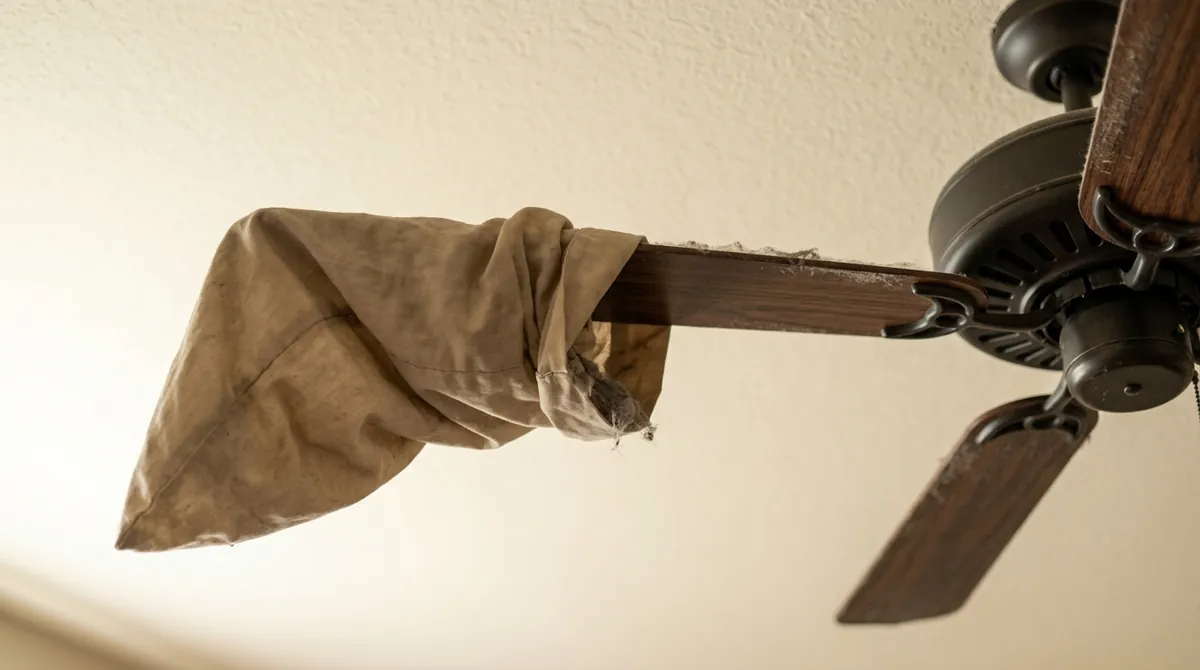
To clean a ceiling fan without spreading dust, turn it off, let the blades stop, and cover the surface below. Slide an old pillowcase over each safely reachable blade and draw it back so loose dust stays inside. Finish suitable blade surfaces with a well-wrung cloth, then fold the covering inward and clean the floor. Leave high or awkwardly placed fans for someone with suitable access equipment.
Decide Whether You Can Reach It Safely
Read the fan's care instructions before choosing a wet or dry method. A suitable extendable fan duster can let you work from the floor without forcing the blades. For hand cleaning, use access equipment designed for the task and follow its standing and handhold instructions. Do not climb onto a bed, table, chair, or counter. If handling the pillowcase would leave you without the support your equipment requires, use the floor-based method or leave the work to someone with suitable equipment.
Inspect the ladder for loose steps, damaged rails, and failed fasteners before use. Keep damaged equipment out of service and the area around the base clear. Face the ladder while climbing, keep your hands free to hold on, and step down to reposition instead of leaning toward another blade.
A fan above a stairwell, a sloping floor, or a tall vaulted ceiling needs a different access plan. Stop if your equipment leaves you stretching, balancing on the top, or unable to work without pulling on the fixture. Do not stack supports under the ladder to gain height.
Prepare the Room and Fan
- Turn the fan off using its normal control, wait for it to stop, and let the light cool. Keep other household members from switching it on. Follow any additional power-isolation instructions in the manual.
- Clear objects from below the fan and cover furniture or bedding with an old sheet. Leave a clear, uncovered footing area for your access equipment.
- Gather an old pillowcase, clean soft cloths, and any cleaner the blade manufacturer permits. Keep supplies within reach without carrying an armful while climbing.
- Keep children and pets out of the work area.
Capture Loose Dust Inside a Pillowcase
Hunter Fan describes sliding a large pillowcase over a blade and gently drawing it back to capture dust from both sides. Use a case longer than the blade, with room to slide without forcing or bending it. Keep pressure light; the blade is not a handhold.
- From a safe position, ease the pillowcase over one blade. Avoid pressing or hanging weight on the blade.
- Draw the fabric back along the blade with light contact so the loosened dust stays inside the case.
- Keep the opening gathered as you move to the next blade. Reposition your step stool or ladder from the floor whenever needed.
- Set the case aside with its dusty side contained. Empty it into a waste container without shaking dust around the room, then launder it according to the fabric's care instructions.
The case catches much of the loose material, but keep the sheet underneath for anything it misses. If the blade is too wide, fragile, or obstructed to fit without force, use the manufacturer's permitted dust-removal method instead. A contained cleaning pass should not require bending the blades or removing parts.
Wipe Only Where the Finish Allows Moisture
After removing loose dust, use a soft, well-wrung cloth on blade surfaces that the fan's care instructions allow you to wipe. Damp wiping helps contain remaining dust. Follow the top, underside, and edges without soaking the material, using a clean section of cloth as it picks up residue.
Keep wood, wood-look, painted, and other coated blades within their manufacturer's moisture and product limits. A greasy kitchen fan may need a permitted cleaner, but harder scraping or a stronger household degreaser can damage a finish. Apply a permitted product to the cloth as directed rather than spraying liquid toward the motor or light kit. Stop if the surface swells, flakes, transfers color, or changes sheen.
Keep the Housing and Lights Installed
Limit this cleaning pass to accessible exterior surfaces. Keep liquid away from motor openings, switches, sockets, and wiring. Leave the motor housing and light globes in place; do not remove a globe or fixed panel to reach dust. Follow the fixture's care instructions for any light surface you can clean without opening it.
Wobble, loose parts, and electrical faults need repair assessment. Do not add tightening screws, balancing blades, or opening the motor to the cleaning checklist. If the fixture moves when you touch it or you cannot reach the buildup without disassembly, stop.
Contain the Cleanup Below
Fold the sheet's dusty surface inward before lifting it off the bed or furniture. Vacuum remaining dust from the room and floor with a suitable attachment, or damp-wipe hard surfaces where their finishes allow it.
Let any wiped surfaces dry before using the fan. Check that no cloth, tool, or covering remains near the blades, then return the room to use.
Choose a Routine You Can Maintain
Check the upper blade surfaces during your household dusting routine and clean before a thick layer accumulates. Adjust the interval to what you see and to the fan manufacturer's instructions. A fan with a light film needs a smaller pass than one with dust stuck to cooking residue.
Booking Detailed Fan Cleaning
Mess Fixers' Ceiling Fans (Deep) covers safely reachable blade tops, undersides, and edges, plus accessible exterior housing, brackets, and light-globe surfaces without disassembly. The team protects the area below and removes loose dust before suitable damp cleaning. Identify each fan and any unusually high fixture before booking; safe reach depends on the equipment available for the visit.
This detailed fan work is separate from a Deep Clean. Dust across the ceiling itself is a different task: Ceiling HEPA-Vacuuming addresses suitable accessible ceiling surfaces with dry-only care.