How to Clean Blinds by Material
By Mess Fixers
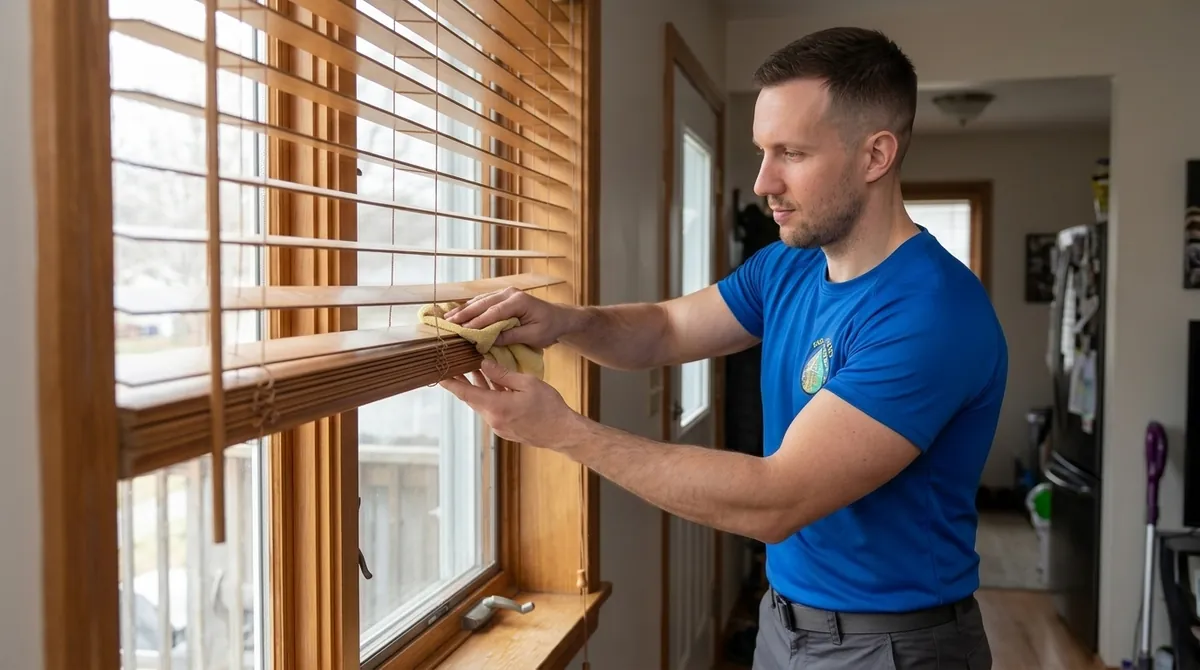
Clean blinds by identifying their material, removing loose dust with the recommended soft cloth or vacuum attachment, then treating remaining marks only with a method the manufacturer allows. Real wood, PVC faux wood, metal, and fabric need different moisture limits. Keep blinds installed for ordinary dusting and wiping; do not assume a bathtub soak suits the whole assembly.
Identify the Blind Before Adding Moisture
Find the brand and product line on your order record or care label. A wood-grain surface alone does not establish whether the slat is real wood, PVC, or a composite. Vertical blinds can have rigid vinyl vanes or soft fabric vanes, and a fabric shade may have a backing or coating that changes its care requirements.
Use this first-pass decision list:
- Real wood: Choose the maker's dry dusting method. Keep steam and excess moisture away.
- PVC faux wood or vinyl: Dust first. Use a damp wipe for remaining film only if the product's care guide allows it.
- Aluminum or metal: Dust with a soft cloth or brush attachment. Check the model before using a cleaner or considering immersion.
- Fabric, cellular, or sheer treatments: Follow the product's fabric-care guide. Wet wiping and soaking are not general-purpose methods for these materials.
- Unknown material, peeling finish, or damaged controls: Pause wet work and ask the manufacturer or a window-treatment cleaner about the specific product.
Dust Horizontal Slats Without Bending Them
Lower the blind and adjust the slats as its instructions direct. Hunter Douglas recommends tilting wood and metal slats almost all the way down so you can reach the areas where they overlap. Wipe along each slat with a soft cloth, then adjust the tilt to reach the other face. Work from the top toward the bottom.
Use a vacuum brush attachment only where the maker permits it. Blinds.com's mini-blind guidance recommends supporting the slats from behind while vacuuming to prevent crinkling. Avoid pulling on slats, cords, or controls to hold the blind still. If the blind will not tilt or lower as intended, stop and address that problem before cleaning.
Real Wood: Keep to the Wood-Care Instructions
Hunter Douglas allows soft-cloth dusting and a vacuum brush attachment on its real-wood blinds and warns against steam and high moisture. It also excludes chemical solvents, scrubbing cleansers, and ultrasonic cleaning for those products. Follow your own maker's finish instructions before applying oil or polish; wood-care products are not interchangeable with cleaners for painted or faux-wood slats.
For a mark that remains after dusting, ask the manufacturer which treatment the finish allows. Do not soak a wooden slat or scrub through its coating to chase a stain. ACI also cautions that excessive furniture polish can leave wax buildup.
PVC Faux Wood and Vinyl: A Controlled Damp Wipe
Blinds.com's PVC faux-wood guide allows a cloth and soapy-water cleaning for dirt and stains. Confirm that permission for your product, then apply its approved cleaner with a damp cloth rather than spraying the assembly. Wipe the affected slat without pulling it out of alignment. Remove residue and dry as the care guide directs.
Keep the headrail and controls out of the wet work. Faux-wood is a material category, not permission to soak every component. Decorative tapes, coatings, and operating systems can carry different limits from the hard slats.
Metal: Check the Whole Assembly Before Washing
For its metal blinds, Hunter Douglas lists a soft cloth, a vacuum brush attachment, and an over-the-counter blinds cleaner used with a soft cloth. Choose the method your product guide permits and support thin slats as you work.
The same manufacturer describes immersion only for specified aluminum products, with collection and component exceptions. It excludes decorative tapes from that method and prohibits immersing several headrails and lift-system components. That is enough reason to reject a universal instruction to put metal blinds in a tub. Use in-place cleaning or consult the maker about your exact product rather than dismantling it to follow a generic tip.
Vertical Blinds: Support Each Vane
Rigid vinyl vanes and fabric vanes need different treatment. Blinds.com recommends a microfiber wipe for vinyl and permits soapy-water wiping for tougher grime. For fabric, it describes downward vacuuming with a brush attachment while supporting the vane from behind. Spot cleaning requires the fabric's permission; dab rather than scrub to avoid pilling.
Leave clips and vanes in place for these steps. The tabs at the top can break if you pull a vane too far. Do not soak fabric vanes or put them in a washing machine; Blinds.com warns that they can lose their shape or coating.
Cellular Shades, Fabric, and Sheers
Read the care instructions for the exact fabric before vacuuming or spot treatment. Blinds.com's general shade guide calls for a brush attachment and warns against using a bare vacuum nozzle that can crumple fabric. It also warns against submerging cellular shades or making them overly wet because their folds can lose shape.
Hunter Douglas cautions that dusting mitts or magnetic cleaners can damage light-dimming fabric backings. For specialty sheers or a stain whose care method you cannot confirm, use a cleaner familiar with the product. Do not turn a slat-cleaning method into a fabric-washing instruction.
Keep Glass Cleaner Off the Blinds
Spray window cleaner onto a cloth rather than toward the glass beside the blind. Hunter Douglas recommends this to prevent splatter from reaching wood finishes and fabric. Treat the glass, sill, frame, and tracks as separate surfaces with their own products and tools.
Booking Blind Cleaning with Mess Fixers
Wet Wipe Blinds covers suitable hard blinds at each selected window after a material and condition check. The blinds stay installed. The team wipes accessible slats on both sides with controlled moisture and cleans reachable headrail surfaces, bottom bar, and suitable controls. Fabric, paper, and cellular shades are outside this add-on.
Select one add-on for each window opening needing that wet slat-by-slat work. Ordinary dry blind care listed in a base checklist does not include it. Tell the team about high or obstructed windows, damaged slats, and controls that do not operate before booking.
Window glass and tracks remain separate. Choose Window Detailing when the selected window needs its glass, frame, sill, track, hardware, and suitable screen addressed together. Interior Windows covers inside glass with accessible frame and sill care and a light track wipe; deep track work is a separate selection. Confirm the component you need cleaned before counting windows.