How to Clean a Barbecue Grill: Prepare, Clean, and Check
By Mess Fixers
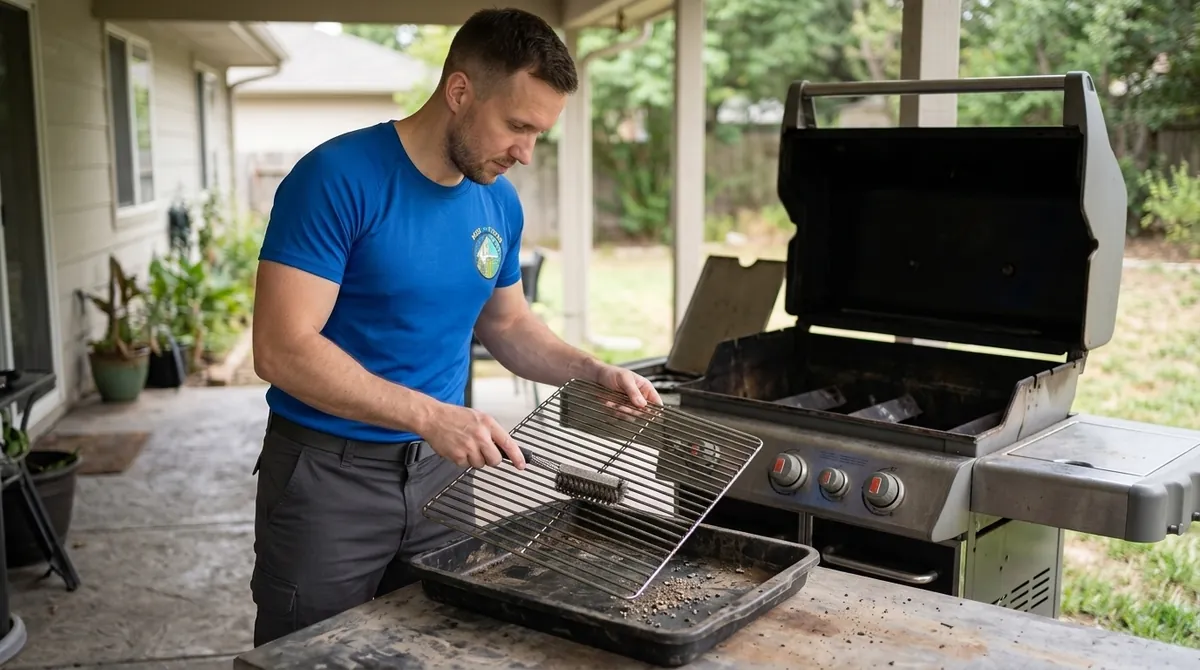
Clean a barbecue grill after it has cooled, with the fuel or power isolated as its manual directs. Remove loose food and grease, clean the cooking grates with coating-compatible tools, empty the grease or ash collector, and wipe the exterior. Keep water away from ignition and electrical parts. Burner work, gas leaks, and damaged parts require the manufacturer's service guidance.
Identify the Grill Before Choosing a Method
Find the care instructions for your model and check the cooking surface. Porcelain-coated grates, bare cast iron, stainless steel, and a flat-top cooking plate can need different tools and aftercare. The Alabama Cooperative Extension System advises checking the owner's manual before scrubbing porcelain grates and avoiding stainless-steel scrubbing tools if you cannot confirm compatibility.
A gas-grill cleaning guide does not cover a pellet grill's electrical components or a griddle's seasoned plate. Use the steps below for accessible household cleaning, then follow the model's instructions for anything specific to its fuel system or finish.
Prepare a Cool, Isolated Work Area
- Turn the grill off and allow it to cool before a deep clean. Weber's gas-grill guide calls for disconnecting the propane tank; follow your model's shutdown and isolation procedure. Do not undo a fixed gas connection.
- Unplug an electric or pellet grill after its prescribed shutdown and cooling sequence.
- Place your tools, a waste container, and a protective covering beside the grill so loosened grease stays off the patio.
- Check that your scraper or pad is suitable for the grate material. Replace a worn cleaning tool before starting. Keep a separate soft cloth for the exterior.
Stop if you smell gas or see a damaged hose, loose connection, or broken component. Do not light the grill to investigate, adjust the gas fittings, or continue cleaning around a suspected leak. Follow the manufacturer's emergency and service instructions.
Clean the Lid and Accessible Interior
With the unit cool, remove loose residue from the inside of the lid using a tool the manual permits. Weber explains that accumulated carbonized grease can flake from the lid onto food. Work loose debris toward the collection area without scraping through coatings.
Clear accessible grease and food buildup from the cook box without taking the appliance apart. Leave burner assemblies, ignition parts, wiring, and fixed panels in place. If the buildup sits behind a component you would have to remove, stop at that boundary and consult the model's care instructions or a service provider.
Clean the Cooking Grates
- Remove loose food with a grate-compatible scraper or non-scratch pad. Good Housekeeping recommends a tool without wire bristles because loose bristles can pose a safety risk.
- If the manual permits lifting out and soaking the grates, use its approved cleaning product and soaking method. Weber describes soapy-water soaking as an option for stuck-on food; do not assume that every coated grate or seasoned surface allows it.
- Work along the grate openings with the approved pad or brush. Stop if a coating starts to chip or lift.
- Rinse as the care instructions direct, inspect for loosened debris, and dry the grates. Apply seasoning only if the instructions for that cooking surface call for it.
Avoid oven cleaner and bleach cleaner inside the grill. Alabama Extension warns that these products can damage the grill and contaminate food prepared on it. Use a product approved for the particular surface, with its stated rinse requirements. A cleaning product suitable for an oven cavity may still be wrong for your grill.
Empty the Grease or Ash Collector
Weber identifies a full grease tray as a flare-up risk. Empty and clean the user-accessible grease tray or drip pan according to the manual. Leave it dry and in its correct position before the next use.
On a charcoal grill, wait until the coals and ash are cold, then empty the ash collector using the manufacturer's disposal guidance. Ash buildup can restrict airflow. Do not light old ash as a cleaning method. On a pellet grill, follow its own ash-drawer instructions; keep water out of the hopper and electrical areas.
Wipe the Exterior and Check Before Use
Wipe loose exterior dirt away first. Use a soft cloth and a finish-compatible cleaner, then remove residue and dry the surface as directed. Alabama Extension warns against excess water around the ignition and gas connection. Hosing down an assembled gas grill puts those parts in the splash path.
Check that the grates and user-removable collection parts sit in their correct positions, no cleaning residue remains, and the unit is dry. Follow the manual's pre-use check before cooking. An uneven flame, failed ignition, persistent gas odor, or damaged cooking surface calls for service or replacement guidance rather than another cleaning pass.
Keep the Next Clean Smaller
Follow the manufacturer's routine grate-care instructions after cooking or before the next use. Weber suggests a deeper clean about every three months, with more frequent attention for heavy use. Check the collector between those sessions and cover the cooled grill when you store it. Adjust the schedule to visible buildup and the care instructions for your model.
Discuss Grill Cleaning Separately from the Home
Grill work is not part of a routine home-cleaning checklist. Before arranging it, identify the grill model, condition, access, and the specific grate, grease-tray, or exterior work needed. Confirm a provider's available scope rather than assuming a house-cleaning visit includes it. Firebox restoration and appliance repair require separate assessment.
Cleaning the surrounding open-air patio or lanai is a different task from cleaning the appliance. That Mess Fixers add-on covers agreed outdoor-area maintenance, not grill cleaning, grease removal from every patio finish, or appliance repair.