How to Choose the Best Window Cleaning Solution for Your Glass
By Mess Fixers
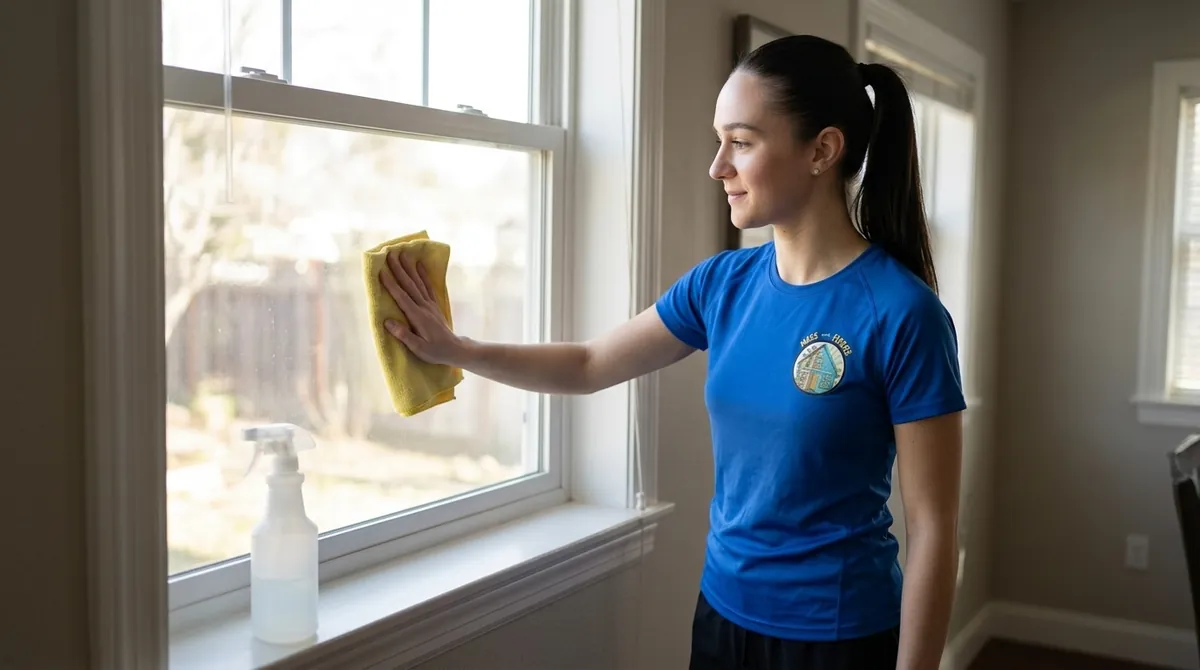
For ordinary uncoated window glass, a ready-to-use, nonabrasive glass cleaner is a practical starting choice if the window maker permits it. Check the label for the surface and the soil you need to remove. Coated glass and applied film need their own care instructions; an ammonia-free label alone does not prove compatibility. Clean out of direct sunlight and remove the solution before it dries on the pane.
Check the Pane Before the Bottle
Look for the window brand, care paperwork, or film installer's instructions. Confirm whether you will clean an uncoated surface, an exposed low-emissivity coating, anti-reflective glass, or an applied film. A low-e label alone does not tell you which surface carries the coating: Vitro notes that many finished insulating-glass units enclose the coating between the panes. Ask the window maker if you cannot identify the surface you can reach.
Keep the frame, seals, and nearby finishes in the decision. Vitro warns that excess solution can affect glazing or insulating-unit sealants and directs readers to the finished-product manufacturer for compatibility. A product that suits the glass still needs to suit the assembled window.
Select by Surface Type
- Confirmed uncoated glass: Start with a nonabrasive cleaner that the window maker permits. Follow its label for application and rinsing. Avoid a product that lists only counters, floors, or another use.
- Exposed low-e coating: Obtain the instructions for that coating before applying cleaner. Vitro's exposed Solarban and Sungate coatings have restrictions on chlorine-containing products and acidic or alkaline cleaners, along with additional scratch precautions.
- Anti-reflective glass: Use that product's specific cleaning guide. Guardian Clarity permits some ammonia-containing household glass cleaners within its stated limit, while also restricting tools and cloths. That permission applies to Clarity; it does not establish a rule for another coated pane.
- Applied film or unidentified coating: Ask its manufacturer or installer which ready-to-use cleaner and cloth to use. Leave the surface alone until you have that answer.
The different instructions from Vitro and Guardian are a reason to identify the surface before buying. An ammonia-free label can help meet a particular restriction, but it does not establish that a cleaner suits every coating or film. Check the complete product and window-care instructions.
Match the Product to the Residue
For loose dust and ordinary dirt, start with the approved routine glass cleaner and clean, nonabrasive tools. For an oily film, look for a compatible glass cleaner whose label covers grease. Follow its directions rather than adding another chemical to the bottle. Skip a specialty deposit remover unless you have identified both the residue and a removal method approved for that pane.
White deposits that remain after a permitted routine wash need a different decision. Vitro's TD-107 explains that runoff from masonry and repeated sprinkler-water deposits can form residues that resist ordinary cleaning. A persistent mark does not establish its composition or prove that it will come off. Ask a glass professional to assess the pane before using an abrasive, acid treatment, or polishing compound.
Clean a Reachable Pane Without Leaving Residue
- Choose a pane you can reach from a secure position without leaning out of a window or working over a drop. Leave inaccessible exterior glass to a provider with an appropriate access plan.
- Check the pane and frame for existing damage. Use clean tools and replace dirty cloths or water before carrying grit onto the next area.
- Clean out of direct sunlight. Vitro warns that sun can dry the solution before you can rinse it away.
- Apply only the permitted product, using its instructions and the window maker's method. Work in sections you can finish before the solution dries. Do not rub dry dirt into a coating.
- Rinse where the product and window instructions require it. Remove the water with an approved squeegee or clean, soft drying cloth. Keep liquid from collecting at seals and finished edges.
- Inspect from an angle. Repeat the permitted routine method on missed dirt; stop rather than increasing force on a mark that remains.
Guardian directs Clarity users to pre-moisten dirt, avoid trapping abrasive particles beneath a cloth, and keep cleaning residue from drying on the glass. It also has product-specific cloth restrictions. Use a squeegee or cloth only when the pane's care guide permits that tool. A familiar microfiber cloth is not a reason to ignore a coating maker's instructions.
Stop Before Scraping or Polishing
Keep razor blades, metal scrapers, and abrasive household detergents off the pane. Guardian prohibits those tools and products on Clarity. Vitro also warns that exposed low-e coatings scratch more easily than uncoated glass. A label, adhesive patch, or mineral mark that resists a routine clean needs its own approved removal method.
Stop if you see new scratches, a change in the coating's appearance, or damage around seals. Existing cloudiness, persistent deposits, and an unknown surface call for the window maker's advice. The severe-residue procedures in Vitro's TD-107 are for evaluation on specific projects; the document says they should not serve as standard cleaning procedures.
Never mix cleaning products. If you choose an EPA Safer Choice-certified cleaner, confirm that it also matches the glass and coating. EPA's program helps buyers identify products with safer ingredients; certification does not replace the window maker's compatibility instructions or guarantee the result on a particular deposit.
Specify the Window Work in a Cleaning Booking
Mess Fixers' residential base checklists describe frame and sill care apart from full window washing. Select Interior Windows for the chosen inside panes; exterior glass and deep tracks are separate. Exterior Windows (1st Floor) covers selected first-floor exterior panes with safe access and excludes screen washing.
For a broader task, Window Detailing covers one selected window's glass on both sides, accessible frame and sill, deep track, hardware, and a suitable screen. Tell the provider about coatings, film, existing damage, and access limits before the visit. Choose the task and quantity from the published scope, and confirm the cleaning method for any special glass.