Bathtub Cleaner: Match the Product to the Tub Material
By Mess Fixers
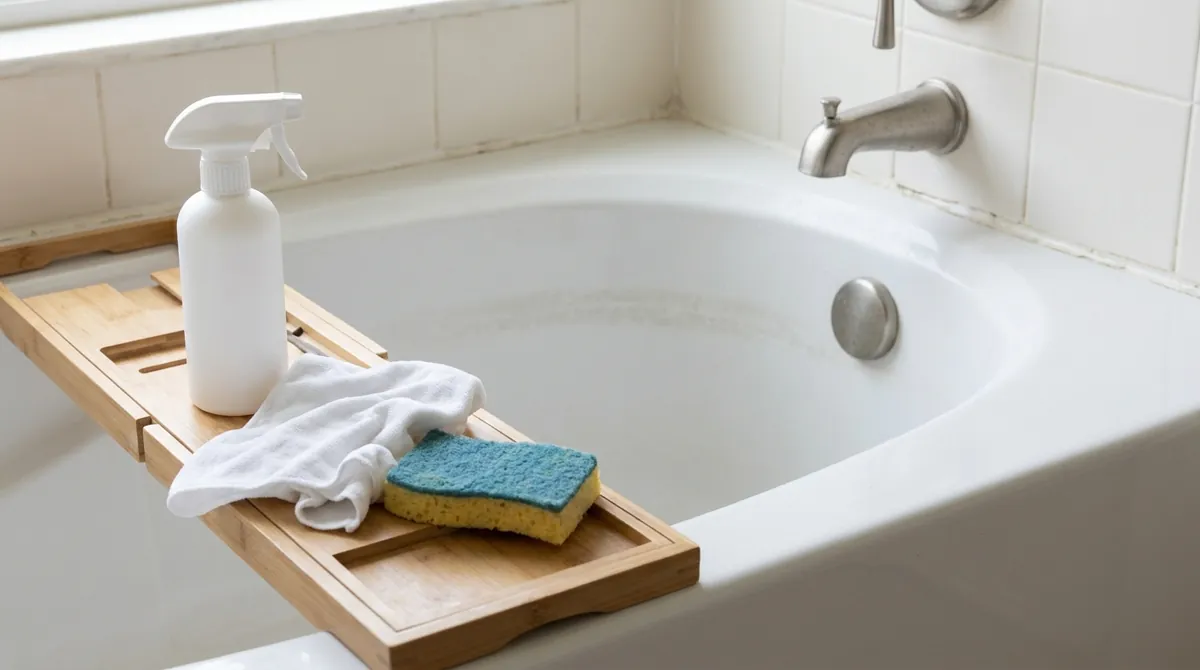
The best cleaning product for your bathtub is one your tub manufacturer permits for that surface and the buildup you need to remove. Start with the material and finish, then check the cleaner's label for compatible surfaces, contact time, rinsing, and precautions. A soap-scum spray suitable for porcelain may damage acrylic, a refinished coating, or nearby stone.
Identify the Tub and Its Finish
Find the model's care sheet, purchase paperwork, or installer instructions. Record both the underlying material and any later finish: an acrylic tub, a porcelain-enameled steel or cast-iron tub, a fiberglass unit, and a refinished tub can have different restrictions. A white glossy surface alone does not identify the material.
If the tub has a newer coating or you cannot identify it, get the installer or manufacturer's care instructions before choosing a cleaner.
Use the Material to Narrow Your Choices
- Acrylic: Start with a cleaner the bath manufacturer approves and a soft cloth. Kohler's acrylic-bath guide prohibits abrasive cleansers and solvents. Its restrictions apply to those products; check your own bath's care sheet before substituting a general bathroom spray.
- Fiberglass: ACI lists compatible tub, tile, and sink cleaners or nonabrasive all-purpose cleaners. It warns that abrasive cleansers and pads can scratch, discolor, or dull the fixture. Confirm the label names fiberglass.
- Porcelain enamel: Check instructions for the enamel finish, including any chip repairs. ACI describes tub, tile, and sink cleaners as options for porcelain tubs; a nonabrasive product and a soft tool are the conservative starting choice. Exposed metal at a chip needs care beyond ordinary surface cleaning.
- Natural stone: Choose a cleaner formulated for the particular stone. ACI warns against acidic cleaners on marble because they can pit and stain it. Protect stone surrounds from overspray even if the tub itself permits the product.
- Cast mineral, cast stone, or a proprietary composite: Use the named manufacturer's instructions. These labels do not establish one universal care method. KALLISTA publishes care instructions for its own acrylic, cast-mineral, and cast-stone products; another brand may specify different products.
- Refinished or reglazed surfaces: Follow the refinisher's care sheet. Approval for the original tub material does not establish compatibility with the newer coating.
Match the Cleaner to the Buildup
Match the product's stated purpose to the buildup: soap film, mineral deposits, or rust. Its label must also permit your tub material and finish. A product made for one stain or surface is not an all-purpose treatment for the bathroom.
A stronger cleaner can damage the tub before it removes a mark. If a permitted product leaves discoloration after the directed treatment, stop and ask the manufacturer whether you are looking at a deposit or finish damage. Scratches, worn enamel, and a dull or etched finish will not respond like surface soil.
Read Five Parts of the Label Before Buying
- Permitted surfaces: Find the tub material by name. Check exclusions for stone, metal trim, coatings, and damaged finishes.
- Application: Check whether to apply to a wet or dry surface and which cloth, sponge, or brush to use.
- Contact time: Allow only the stated working time. Do not leave a product overnight to make it stronger.
- Removal: Follow the rinse directions and any limits on residue or repeated applications.
- Precautions: Follow the ventilation, glove, eye-protection, storage, and keep-out-of-reach instructions.
Among compatible products, EPA's Safer Choice label offers an ingredient and performance review; its fragrance-free designation helps identify products without fragrance. Neither designation overrides the tub's care instructions.
Use One Compatible Product for the Cleaning Pass
Remove bottles and other items so you can reach the tub. Follow the care sheet and label, test a permitted product on a small inconspicuous area, and check the result before treating the whole surface. Let the product work for its directed contact time, wipe with the approved tool, rinse, and dry if instructed. Use a soft touch around caulk rather than scrubbing the seal with a stiff brush.
Never mix bleach with another cleaner, including vinegar, acidic descalers, or ammonia-containing products. Do not layer a different cleaner onto residue from the first. If you do not know what remains on the tub or how to remove it, follow the product manufacturer's instructions before continuing. Keep toilet-bowl cleaner off the bathtub.
Keep Jets and Finish Repairs Separate
A jetted tub's surface and its internal system can have separate maintenance instructions. This guide covers the exposed tub surface. Follow the model's own system-care procedure without removing jets, drain hardware, or access panels to clean them.
Stop if cleaning lifts the coating, changes its sheen or color, or reveals a crack or chip. KALLISTA directs owners of dull or scratched units to customer service for repairs. Failing caulk, loose grout, and damaged fixture plating also need assessment rather than more abrasive scrubbing.
Choose the Bathroom Work You Need
For booked cleaning, describe the material and the buildup before the visit. Mess Fixers' Deep Clean covers detailed bathroom work within its selected allowance. The Full Bath (Deep) add-on covers an additional full bathroom beyond that allowance. Material and finish determine the method; cleaning does not repair etching, failed caulk, or damaged coatings.
An additional bathroom needing ordinary fresh-spot and soap-film care may fit Full Bath (Standard) instead. Confirm the room, the surface, and the work you want so the booking matches the tub's condition.