Apartment Cleaning Supplies Checklist: A Compact Starter Kit
By Mess Fixers
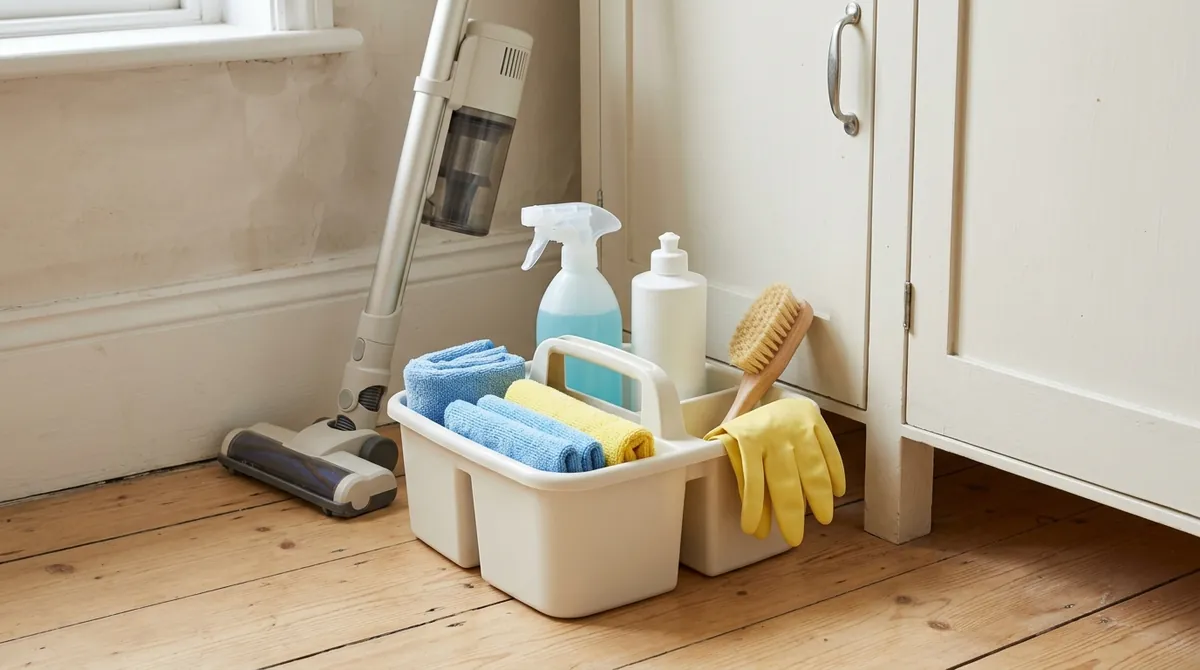
Start an apartment cleaning supplies checklist with washable cloths, a toilet brush, a floor-cleaning tool, trash bags, gloves, and cleaners labeled for the surfaces in your rental. Add a separate product only for a task the existing bottles cannot cover. Check where you can store the kit before buying it; a small apartment still needs secure storage away from children, pets, food, and heat.
Make a Surface List Before a Shopping List
Walk through the apartment and name the surfaces you need to clean: kitchen counter, stovetop, sink, bathroom fixtures, mirror, floors, and any rugs. Check the move-in information or ask the property manager about finishes you cannot identify. A stone counter, coated faucet, wood floor, and television screen should not inherit the same cleaning method because they share a room.
For each surface, check the maker's care instructions and the product label together. CDC recommends products suitable for the surface and says to follow manufacturer instructions for electronics. If you cannot confirm compatibility, leave the specialty cleaner out of the cart until you can. Stronger chemistry is not a substitute for knowing what the finish allows.
Use This Starter-Kit Checklist
- Washable cleaning cloths and dry towels: Choose cloths the surface maker allows. Assign kitchen and toilet-area cloths separate jobs, and set aside used ones for laundering. Keep a clean dry cloth available for the finishing wipe.
- A soft, non-scratching sponge or brush: Match the tool to the finish instructions. Do not assume a scrub pad is safe because its package says it is for kitchens.
- A toilet brush with a holder: Keep it dedicated to the toilet. Add a bowl cleaner only after checking both its label and the fixture's care instructions.
- A broom and dustpan or a vacuum: Choose for the floors and rugs you have. Check the floor maker's directions for suitable heads or attachments before using them.
- A mop or washable floor pad: Choose a tool that lets you control moisture. Add a floor product only if the floor's care instructions and the bottle allow it.
- Dish detergent: Keep it for the dishwashing and other uses named on its label. It is not a universal screen, floor, or stone-cleaning product.
- A surface cleaner with confirmed uses: A multi-surface bottle may cover several listed hard surfaces. Check which ones it excludes before deciding that it replaces another product.
- Gloves and any protection required by the label: Read the precautions before buying, including ventilation requirements. A product you cannot use as directed in your bathroom is a poor choice for the kit.
- Trash bags and a carry caddy: Match bags to your bins. Use the caddy to carry closed bottles and tools to the job, then return chemicals to their secure storage place.
This is a starting checklist, not a requirement to buy a new item in each category. Keep serviceable tools you already own. A ready-to-use product can avoid a measuring task; a concentrate belongs in the kit only if you can follow its own directions and store it as labeled. Do not make up a dilution or combine products to fill a gap.
Add These Only When the Apartment Needs Them
- Mirror or ordinary-glass cleaner: Add it if an existing product does not cover that glass. Keep it off screens and other surfaces unless their makers permit it.
- A bathroom buildup cleaner: First identify the fixture finish and the work needed. Check the product's surface list and exclusions; do not treat an unknown coated faucet with a product chosen for a toilet bowl.
- A floor-specific cleaner: Use the finish maker's requirements, not the room name, to decide. A kitchen tile product does not establish permission for a wood or laminate floor.
- An appliance-interior product: Check the exact appliance manual. A cleaner approved for an oven cavity does not become suitable for refrigerator liners or seals.
- A disinfectant for a separate need: Cleaning and disinfecting are different tasks. If disinfection is required, choose a compatible labeled product and follow its full directions rather than assuming a routine surface cleaner does that work.
Read the Bottle Before You Buy It
The American Cleaning Institute identifies directions, caution warnings, ingredients, and storage and disposal instructions as the main label sections. Use them to make a short buying decision:
- Find your surface. Confirm the allowed material and finish, including any exclusions. If it is unclear, ask the surface maker or product maker before use.
- Read the application and removal steps. Check whether you must rinse, leave the product for a stated period, or use a particular tool. Food-contact surfaces need any rinsing the label requires.
- Check the precautions. Confirm you can provide the required ventilation and protective equipment and keep other people and pets away as directed.
- Check storage and disposal. Make sure the bottle can stay upright and closed in a place that meets its instructions.
- Check for overlap. If a bottle already in your kit covers the same approved tasks, buy the replacement when needed instead of storing another open product.
Store the Kit Without Creating a New Hazard
EPA says to keep household cleaners in their original containers, with the label, and out of reach of children and pets. Do not decant them into drinking bottles or food containers. Keep lids tight and avoid spraying or storing products near pet food and water dishes.
Poison Control recommends cabinets with child-resistant latches and warns that an unlocked low kitchen or bathroom cabinet is a dangerous storage location. A portable caddy is not secure storage by itself. Keep chemicals away from food, and follow each label's separation and temperature requirements. Poison Control also warns against leaving aerosol cans on a stove, near heat, or in direct sunlight.
Choose secure storage first, even if it means using more than one space for products that need separation. Put the kit away after the job; leaving bottles beside the toilet or open on the counter defeats the storage plan.
Keep Products Separate During Use
Poison Control advises never mixing household cleaning products. Bleach with an acidic toilet cleaner and bleach with ammonia are dangerous examples, not a complete list of incompatible combinations. Do not pour products together in a bucket, add a second cleaner to a treated surface, or experiment with an unlabeled bottle left by a previous occupant.
Use ventilation as directed and keep children and pets away from the active cleaning area. Do not use a product you cannot identify. For a suspected exposure, call U.S. Poison Control at 1-800-222-1222 with the container or label available; do not try to neutralize a cleaner with another chemical.
Separate Household Upkeep From a Booked Clean
The kit above is for your own routine work. Mess Fixers brings standard supplies and equipment for its booked visits. Standard Clean covers the listed routine dust, accessible floors, kitchen and bathroom care, and light straightening in a maintained home. It does not include deciding what to throw away or reorganizing your cleaning cupboard.
Deep Clean provides broader detailed work within its own checklist. Oven, refrigerator, and freezer interiors remain separate add-ons. Neither service repairs worn finishes or supplies a mold-remediation plan. Compare the actual checklists before booking, and share sensitive finishes, do-not-touch areas, and product preferences rather than buying a stronger kit for work outside ordinary cleaning.